

 4.7
4.7
How Much Does an Electric Tugger Cost? Real US Prices by Load Capacity
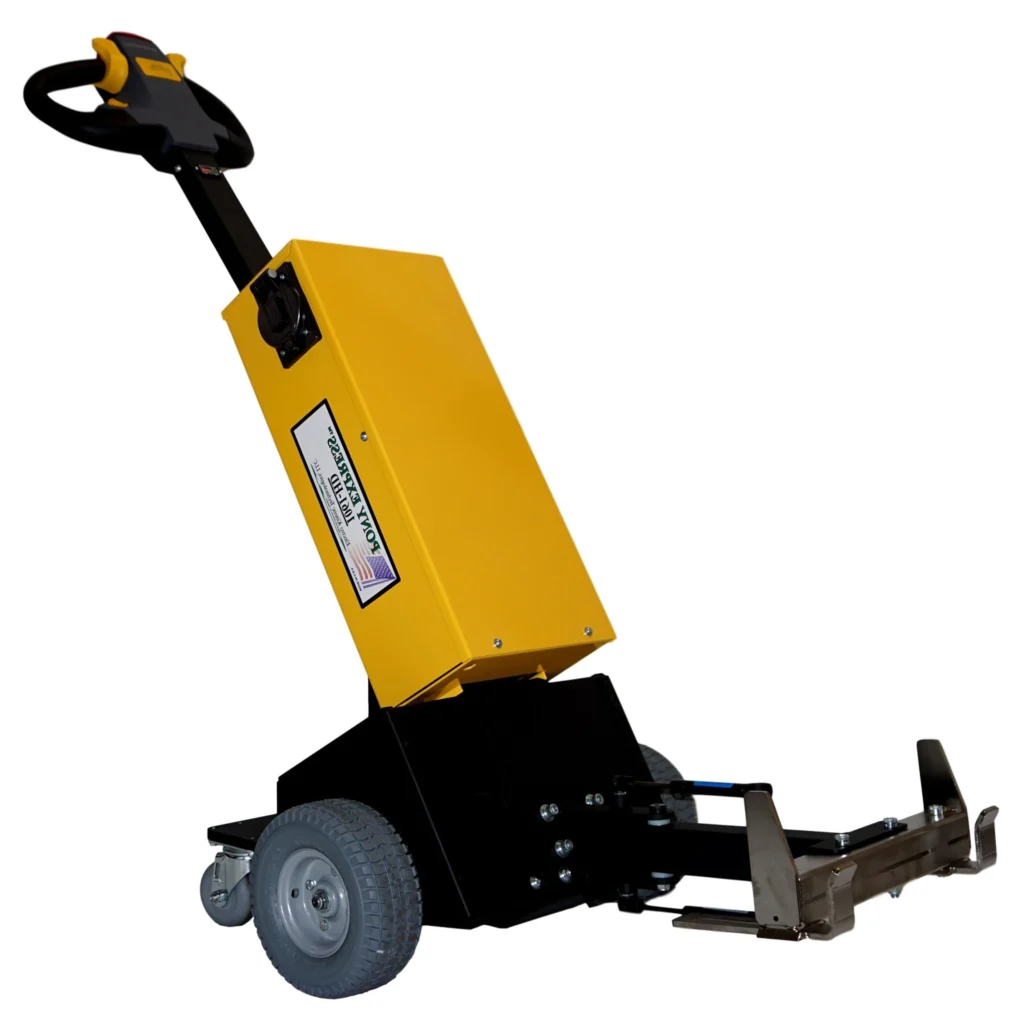
Plan on roughly $4,752 for a 2,000 lb compact electric tugger and up to $20,195 for a 25,000 lb AC industrial unit, with most pedestrian walk-behind models landing between $5,000 and $10,000. At the bottom of the ladder sits the Pony Express 1061-HD at $4,752, a 2,000 lb compact AGM tugger. At the top sits the Pony Express AC Tugger 25K+ at $20,195, rated 25,000 lbs on casters. Both are in stock with a published price and no quote form, which is rare in this category.
The single biggest factor in what you pay is load capacity. Speed, battery type, and motor matter, but the weight a tugger pulls drives almost the whole price. Match your load weight to a rung on the price ladder and you land on a real dollar figure. One thing to keep straight before the numbers is that a tugger moves wheeled loads horizontally, it does not lift them, so this is not a forklift price comparison.
Prices on this page are HDM live sale prices, current as of June 2026. Last updated June 2026.
Our picks at a glance
- Top Pick
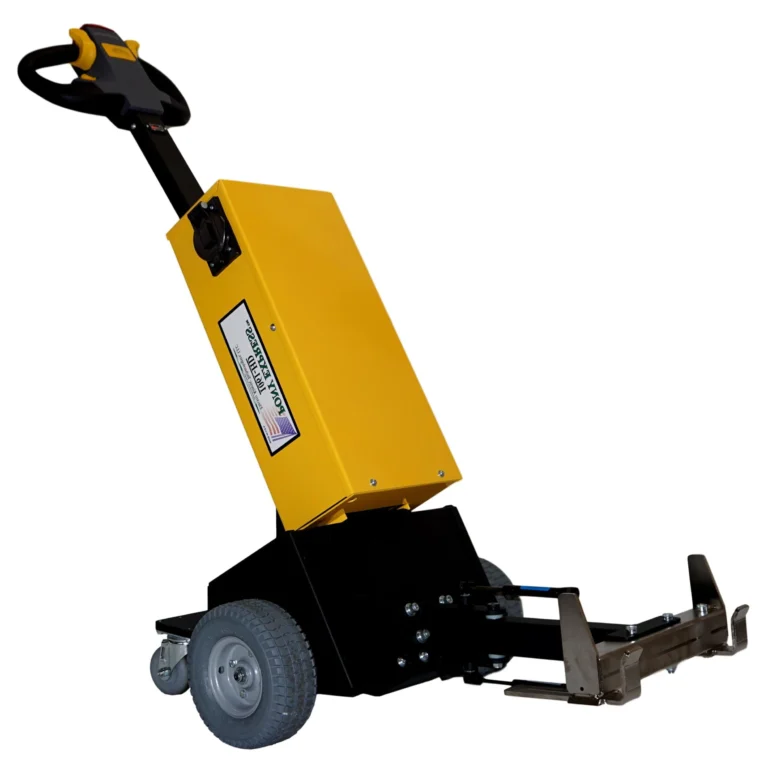 Pony Express 1061-HD Electric Powered Tugger
- Weight Capacity2000 lbs. on flat surface
- Battery35 Ah, AGM Deep Cycle
- Variable Speed Range0 to 1.5 mph low setting, 0 to 3.0 mph high setting
$4,752View details - Pony Express 1061-HD Lithium Electric Powered Tugger
- Weight Capacity2000 lbs. on flat surface
- Battery40 Ah, lithium iron phosphate, hot swappable
- Variable Speed Range0 to 1.5 mph low setting, 0 to 3.0 mph high setting
$7,199View details 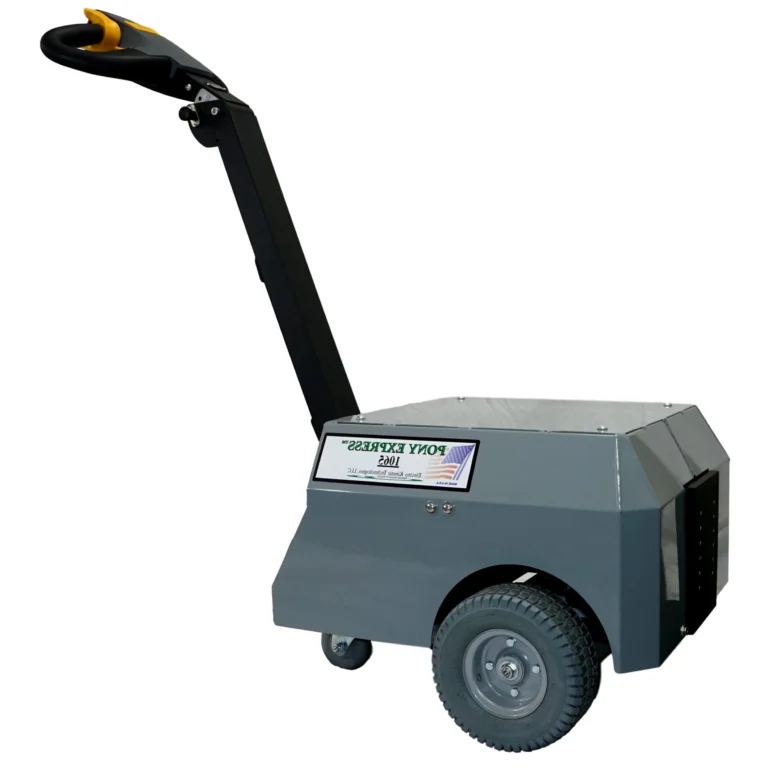 Pony Express 1065 Electric Powered Tugger for Loads up to 5000 lbs
- Weight Capacity5000 lbs. on flat surface
- Battery70 Ah, AGM
- Variable Speed Range0 to 1.5 mph low setting, 0 to 3.0 mph high setting
$6,279View details- Pony Express 1065-HD Electric Powered Tugger for Loads up to 6500 lbs
- Weight Capacity6500 lbs. on flat surface
- Battery70 Ah, AGM
- Variable Speed Range0 to 1.5 mph low setting, 0 to 3.0 mph high setting
$7,949View details - Pony Express 1065-XHD Electric Powered Tugger for Loads up to 7500 lbs
- Weight Capacity7500 lbs. on flat surface
- Battery70 Ah, AGM
- Variable Speed Range0 to 1.5 mph low setting, 0 to 3.0 mph high setting
$8,949View details
How much does an electric tugger cost?
An electric tugger costs about $4,752 for a 2,000 lb compact model and runs up to $20,195 for a 25,000 lb AC industrial unit, with most pedestrian models priced between $5,000 and $10,000. The exact bottom of the ladder is the Pony Express 1061-HD at $4,752, a 2,000 lb compact tugger on a 35 Ah AGM deep cycle battery. The ceiling is the AC Tugger 25K+ at $20,195, a 48V AC machine rated 25,000 lbs on casters.
These are published in-stock US prices, not ranges that end in a quote form. That matters because most of the field hides the number. Your load weight maps straight to a dollar figure here, with no form to fill in and no callback to wait on.
What moves the price is load capacity. A faster tugger does not cost more, because there is no faster tugger. Every model in the Pony Express range tops out at the same 0 to 3.0 mph. What you pay for is how much weight the machine pulls, so the pricing breaks down by capacity, lightest loads first.
A tugger is horizontal transport. It hitches to a cart that already rolls and tows it at walking pace. It does not lift or stack a pallet, so these are tugger prices, not forklift prices. How a tugger compares with a forklift is a separate cost question.
What you actually pay for - capacity, not speed
Across the whole Pony Express range the speed is identical at 0 to 1.5 mph on the low setting and 0 to 3.0 mph on the high setting, so the price you pay tracks weight capacity and battery type, not how fast the tugger moves. Read down the spec table and the speed column never changes. Read down the price column and it climbs from $4,752 to $20,195. That gap is capacity, not pace.
Three things actually move the price.
- Weight capacity. The headline lever. A 2,000 lb compact starts at $4,752, a 5,000 lb mid unit is $6,279, and the 25,000 lb industrial flagship is $20,195. More pulling power costs more money.
- Battery chemistry. AGM is the affordable standard. Lithium adds a hot-swappable pack, faster recharge, and Bluetooth monitoring, and it carries a premium inside the same capacity tier.
- Motor type. The standard range runs a high-torque 24V DC motor. The industrial flagship steps up to a 48V AC Vector Power transaxle, which is the main reason it sits so far above the DC models.
Speed stays flat for a simple reason. These are pedestrian-operated walk-behind units, so an operator walks beside the load with a hand on the speed wheel. The top setting is set to a normal walking pace on purpose, for safe indoor maneuvering near people and product. A faster machine would not be safer or more useful, so the manufacturer does not build one, and you do not pay for one.
Electric tugger prices by load capacity
Electric tugger prices step up in clear capacity bands. $4,752 at 2,000 lb, $6,279 at 5,000 lb, $7,949 at 6,500 lb, $8,949 at 7,500 lb, and $20,195 at 25,000 lb on casters. The table below maps every capacity band to its price. Find the row that covers your heaviest loaded cart, and the price next to it is what that machine costs today.
Notice that every row shares the same 0 to 3.0 mph speed. That is the visual proof that capacity drives the cost. The weight column climbs, the battery grows, and the price follows, while the speed column stays put. All prices are HDM live sale prices, current June 2026.
Electric tugger prices by load capacity (EK Tech Pony Express, current June 2026)
| Model | Weight Capacity | Battery | Variable Speed Range | Price |
|---|---|---|---|---|
| Pony Express 1061-HD | 2000 lbs. on flat surface | 35 Ah, AGM Deep Cycle | 0 to 1.5 mph low setting, 0 to 3.0 mph high setting | $4,752 |
| Pony Express 1061-HD Lithium | 2000 lbs. on flat surface | 40 Ah, lithium iron phosphate, hot swappable | 0 to 1.5 mph low setting, 0 to 3.0 mph high setting | $7,199 |
| Pony Express 1065 | 5000 lbs. on flat surface | 70 Ah, AGM | 0 to 1.5 mph low setting, 0 to 3.0 mph high setting | $6,279 |
| Pony Express 1065-HD | 6500 lbs. on flat surface | 70 Ah, AGM | 0 to 1.5 mph low setting, 0 to 3.0 mph high setting | $7,949 |
| Pony Express 1065-XHD | 7500 lbs. on flat surface | 70 Ah, AGM | 0 to 1.5 mph low setting, 0 to 3.0 mph high setting | $8,949 |
| Pony Express AC Tugger 25K+ | 25,000 lbs. on casters | 48 VDC, 100 Ah AGM or 48 VDC, 120 Ah lithium iron phosphate | 0 to 1.5 mph low setting, 0 to 3.0 mph high setting | $20,195 |
Compact tuggers - 2,000 lb loads from $4,752
Compact electric tuggers for loads up to 2,000 lb start at $4,752 for the AGM Pony Express 1061-HD, the cheapest published tugger price on the page. It carries 2,000 lbs on a flat surface, runs a 35 Ah AGM deep cycle battery, and uses an adjustable 39 to 54 inch frame that stretches to reach longer carts. Figure roughly 8 hours of operation per charge with about a 4 hour AGM recharge.
There is spread inside this tier. The Pony Express 1062 sits at $5,399 for the same 2,000 lb rating on a tighter 25 inch fixed frame, so a buyer choosing inside the compact class is really choosing between a longer adjustable body and a shorter nimble one, not between two capacities.
The battery is the bigger price fork. The 1061-HD Lithium runs $7,199, which is roughly $2,447 over the AGM version for the same 2,000 lb capacity. That premium buys a hot-swappable 40 Ah lithium iron phosphate pack, Bluetooth app monitoring, and about a 3 hour recharge instead of the AGM's 4 hours. If a single battery covers your shift, the AGM saves the money. If you run back-to-back shifts, the hot-swap pack is what you are paying for.
This tier fits hospitals, labs, and smaller warehouses moving single linen carts, supply carts, and bins. If your loads stay under 2,000 lb, start with the compact tuggers for loads up to 2000 lbs and size up only if your heaviest cart pushes past the rating.
Electric tugger prices by load capacity
- #1Best overall
Pony Express 1061-HD Electric Powered Tugger
The entry price point and the cheapest published tugger on the page. A 2,000 lb compact AGM machine with a 35 Ah deep cycle battery and an adjustable 39 to 54 inch frame that reaches longer carts. It anchors the bottom rung of the capacity ladder and is the cleanest place for a facility to test whether a tugger fits its workflow.
See price & details- Pros
- 2,000 lbs on a flat surface, dual 0 to 1.5 and 0 to 3.0 mph speeds
- Lowest published price in the lineup at $4,752
- Adjustable 39 to 54 inch length suits longer carts
- In stock with a published price, no quote form
- Cons
- AGM pack only, recharge is about 4 hours
- Compact frame, so the heaviest carts need the 1065 or above
- #2
Pony Express 1061-HD Lithium Electric Powered Tugger
Same 2,000 lb capacity as the base 1061-HD, priced to show what the lithium upgrade costs inside one tier. The roughly $2,447 premium over the AGM version buys a hot-swappable 40 Ah lithium iron phosphate pack, Bluetooth monitoring, and about a 3 hour recharge. It earns its premium in multi-shift operations that cannot wait on a 4 hour AGM charge.
See price & details- Pros
- 2,000 lbs on a flat surface, the same load as the AGM 1061-HD
- Hot-swappable 40 Ah lithium iron phosphate pack
- Bluetooth app to monitor battery status from a phone
- About a 3 hour recharge versus the AGM's 4 hours
- Cons
- Same 2,000 lb load as the base 1061-HD, the upgrade is the battery not the capacity
- Hot-swap pack only earns its keep in multi-shift use
- #3
Pony Express 1065 Electric Powered Tugger for Loads up to 5000 lbs
The mid-capacity value step. It pulls 5,000 lbs on a 70 Ah AGM pack for about the price of a high-end compact, in the same 25 inch by 24 inch body. For roughly $1,527 over the base 1061-HD you more than double the load, which makes it the pick when carts outgrow 2,000 lb but do not need the heavy-duty frame.
See price & details- Pros
- 5,000 lbs on a flat surface for $6,279
- 70 Ah AGM, roughly 8 hours of operation per charge
- Compact 25 inch by 24 inch body despite the higher capacity
- Costs less than the lithium 1061-HD while pulling 2.5 times the load
- Cons
- AGM recharge is about 4 hours, no factory lithium option in this SKU
- Standard hitch only, the bin-hitch 1065-LS is a separate laundry variant
- #4
Pony Express 1065-HD Electric Powered Tugger for Loads up to 6500 lbs
The heavy-duty tier opener at 6,500 lbs. It keeps the same 25 inch by 24 inch chassis and 70 Ah AGM pack as the mid 1065, so the step from $6,279 to $7,949 is paying for pulling capacity, not a bigger machine. The right rung for carts in the high 5,000s to low 6,000s.
See price & details- Pros
- 6,500 lbs on a flat surface for $7,949
- Same compact 25 inch by 24 inch footprint as the mid 1065
- 70 Ah AGM, roughly 8 hours of operation per charge
- Automatic holding brake keeps the load steady on a graded floor with a reduced pull on a slope
- Cons
- AGM recharge is about 4 hours
- For loads past 7,000 lb you want the 1065-XHD
- #5
Pony Express 1065-XHD Electric Powered Tugger for Loads up to 7500 lbs
The top of the standard 24V DC range at 7,500 lbs and the top walk-behind rung on the ladder. Same compact body, dual-speed control, and 70 Ah AGM pack as the rest of the 1065 line, moving the heaviest load the DC platform handles before the jump to the AC flagship.
See price & details- Pros
- 7,500 lbs on a flat surface, the most a 24V DC Pony Express tows
- Compact 25 inch by 24 inch body despite the high capacity
- 70 Ah AGM, roughly 8 hours of operation per charge
- Automatic holding brake holds the load on a graded floor with a reduced pull on a slope
- Cons
- AGM recharge is about 4 hours, no factory lithium option in this SKU
- Top of the 24V DC range, heavier loads jump to the AC flagship
- #6
Pony Express Electric Powered AC Tugger 25K+
The ceiling of the price ladder and the only AC machine in the family. A 48V AC Vector Power transaxle moves 25,000 lbs on casters and 100,000 lbs on rails, with a choice of 100 Ah AGM or 120 Ah lithium iron phosphate batteries, Bluetooth fleet management, and a roughly 90 minute recharge. More than double the price of the 7,500 lb 1065-XHD, because it is a fundamentally different drive for extreme loads.
See price & details- Pros
- 25,000 lbs on casters and 100,000 lbs on rails, the heaviest in the range
- 1.7 kW transaxle on AC Vector Power technology
- Choice of 100 Ah AGM or 120 Ah lithium, roughly 90 minute recharge
- Bluetooth fleet management for multi-unit operations
- Cons
- External charger and 48V AC drive suit a fixed charging station
- Overkill for anything under heavy industrial and rail loads
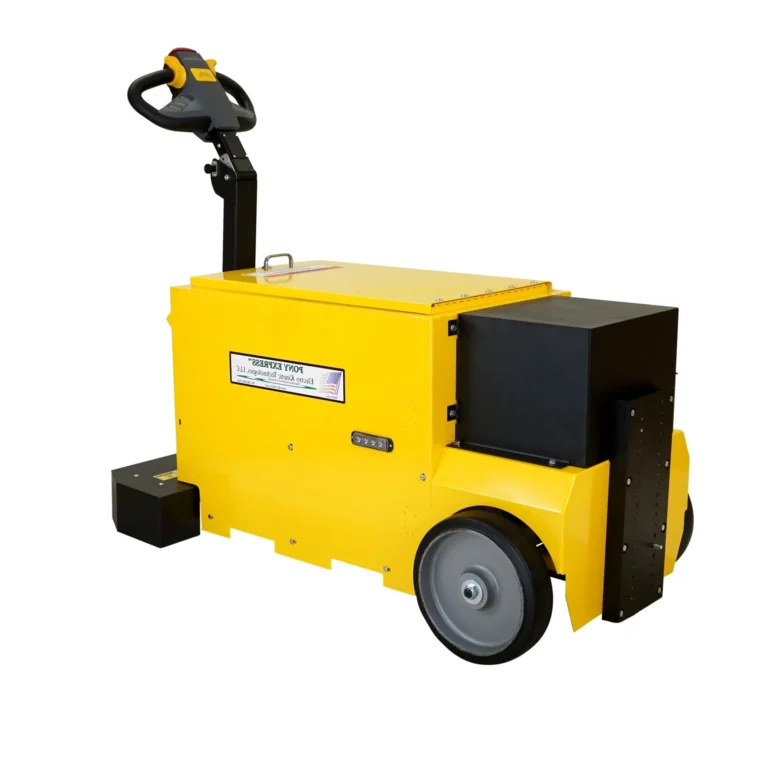
Mid-capacity tuggers - 5,000 lb loads around $6,279
Mid-capacity tuggers that pull 5,000 lb start at $6,279 for the Pony Express 1065, about the price of a high-end compact but with a 70 Ah AGM pack and more than double the load. For about $1,527 over the base 1061-HD, you go from 2,000 lb to 5,000 lb of pulling capacity on the same compact 25 inch by 24 inch body. It even lands below the lithium 1061-HD's $7,199, so stepping up a capacity band here costs less than the lithium upgrade does inside the compact tier.
This is the value step when your loads outgrow 2,000 lb but do not need the heavy-duty frame. The 1065 runs the same dual 0 to 1.5 and 0 to 3.0 mph speeds and the same roughly 8 hours of operation per charge as the compact class. You are buying capacity, not size.
Purpose-built variants in this tier carry a premium. The Pony Express 1065-LS linen and laundry model is $7,549 for the same 5,000 lb rating, and the extra cost buys a quick-connect bin hitch that needs no modification to existing laundry bins. For healthcare and hospitality laundry-bin transport, that hitch is the reason to pay the premium over the standard 1065.
Electric tugger prices by load capacity
- #1Best overall
Pony Express 1061-HD Electric Powered Tugger
The entry price point and the cheapest published tugger on the page. A 2,000 lb compact AGM machine with a 35 Ah deep cycle battery and an adjustable 39 to 54 inch frame that reaches longer carts. It anchors the bottom rung of the capacity ladder and is the cleanest place for a facility to test whether a tugger fits its workflow.
See price & details- Pros
- 2,000 lbs on a flat surface, dual 0 to 1.5 and 0 to 3.0 mph speeds
- Lowest published price in the lineup at $4,752
- Adjustable 39 to 54 inch length suits longer carts
- In stock with a published price, no quote form
- Cons
- AGM pack only, recharge is about 4 hours
- Compact frame, so the heaviest carts need the 1065 or above
- #2
Pony Express 1061-HD Lithium Electric Powered Tugger
Same 2,000 lb capacity as the base 1061-HD, priced to show what the lithium upgrade costs inside one tier. The roughly $2,447 premium over the AGM version buys a hot-swappable 40 Ah lithium iron phosphate pack, Bluetooth monitoring, and about a 3 hour recharge. It earns its premium in multi-shift operations that cannot wait on a 4 hour AGM charge.
See price & details- Pros
- 2,000 lbs on a flat surface, the same load as the AGM 1061-HD
- Hot-swappable 40 Ah lithium iron phosphate pack
- Bluetooth app to monitor battery status from a phone
- About a 3 hour recharge versus the AGM's 4 hours
- Cons
- Same 2,000 lb load as the base 1061-HD, the upgrade is the battery not the capacity
- Hot-swap pack only earns its keep in multi-shift use
- #3
Pony Express 1065 Electric Powered Tugger for Loads up to 5000 lbs
The mid-capacity value step. It pulls 5,000 lbs on a 70 Ah AGM pack for about the price of a high-end compact, in the same 25 inch by 24 inch body. For roughly $1,527 over the base 1061-HD you more than double the load, which makes it the pick when carts outgrow 2,000 lb but do not need the heavy-duty frame.
See price & details- Pros
- 5,000 lbs on a flat surface for $6,279
- 70 Ah AGM, roughly 8 hours of operation per charge
- Compact 25 inch by 24 inch body despite the higher capacity
- Costs less than the lithium 1061-HD while pulling 2.5 times the load
- Cons
- AGM recharge is about 4 hours, no factory lithium option in this SKU
- Standard hitch only, the bin-hitch 1065-LS is a separate laundry variant
- #4
Pony Express 1065-HD Electric Powered Tugger for Loads up to 6500 lbs
The heavy-duty tier opener at 6,500 lbs. It keeps the same 25 inch by 24 inch chassis and 70 Ah AGM pack as the mid 1065, so the step from $6,279 to $7,949 is paying for pulling capacity, not a bigger machine. The right rung for carts in the high 5,000s to low 6,000s.
See price & details- Pros
- 6,500 lbs on a flat surface for $7,949
- Same compact 25 inch by 24 inch footprint as the mid 1065
- 70 Ah AGM, roughly 8 hours of operation per charge
- Automatic holding brake keeps the load steady on a graded floor with a reduced pull on a slope
- Cons
- AGM recharge is about 4 hours
- For loads past 7,000 lb you want the 1065-XHD
- #5
Pony Express 1065-XHD Electric Powered Tugger for Loads up to 7500 lbs
The top of the standard 24V DC range at 7,500 lbs and the top walk-behind rung on the ladder. Same compact body, dual-speed control, and 70 Ah AGM pack as the rest of the 1065 line, moving the heaviest load the DC platform handles before the jump to the AC flagship.
See price & details- Pros
- 7,500 lbs on a flat surface, the most a 24V DC Pony Express tows
- Compact 25 inch by 24 inch body despite the high capacity
- 70 Ah AGM, roughly 8 hours of operation per charge
- Automatic holding brake holds the load on a graded floor with a reduced pull on a slope
- Cons
- AGM recharge is about 4 hours, no factory lithium option in this SKU
- Top of the 24V DC range, heavier loads jump to the AC flagship
- #6
Pony Express Electric Powered AC Tugger 25K+
The ceiling of the price ladder and the only AC machine in the family. A 48V AC Vector Power transaxle moves 25,000 lbs on casters and 100,000 lbs on rails, with a choice of 100 Ah AGM or 120 Ah lithium iron phosphate batteries, Bluetooth fleet management, and a roughly 90 minute recharge. More than double the price of the 7,500 lb 1065-XHD, because it is a fundamentally different drive for extreme loads.
See price & details- Pros
- 25,000 lbs on casters and 100,000 lbs on rails, the heaviest in the range
- 1.7 kW transaxle on AC Vector Power technology
- Choice of 100 Ah AGM or 120 Ah lithium, roughly 90 minute recharge
- Bluetooth fleet management for multi-unit operations
- Cons
- External charger and 48V AC drive suit a fixed charging station
- Overkill for anything under heavy industrial and rail loads
Heavy-duty tuggers - 6,500 to 7,500 lb from $7,949
Heavy-duty DC tuggers price at $7,949 for 6,500 lb on the Pony Express 1065-HD and $8,949 for 7,500 lb on the Pony Express 1065-XHD, the ceiling of the standard 24V DC range before the AC industrial flagship. The 1065-XHD is the top walk-behind rung on the ladder.
Both share the same 25 inch by 24 inch chassis footprint and the same 70 Ah AGM pack as the mid 1065. The price step from $6,279 to $7,949 to $8,949 is paying for pulling capacity, not a bigger machine. Same body, same battery, same walking speed, more weight on the hitch.
This tier is the right buy for heavier parts carts, pallet dollies, and heavier industrial loads in manufacturing and distribution. If your cart weighs in the high 5,000s or low 6,000s, the 6,500 lb 1065-HD is your rung. If it runs to 7,000 lb and up, step to the 1065-XHD. For 5,000 lb and above, the heavy-duty tuggers from 5000 lbs and up collection lines these models up by capacity.
Electric tugger prices by load capacity
- #1Best overall
Pony Express 1061-HD Electric Powered Tugger
The entry price point and the cheapest published tugger on the page. A 2,000 lb compact AGM machine with a 35 Ah deep cycle battery and an adjustable 39 to 54 inch frame that reaches longer carts. It anchors the bottom rung of the capacity ladder and is the cleanest place for a facility to test whether a tugger fits its workflow.
See price & details- Pros
- 2,000 lbs on a flat surface, dual 0 to 1.5 and 0 to 3.0 mph speeds
- Lowest published price in the lineup at $4,752
- Adjustable 39 to 54 inch length suits longer carts
- In stock with a published price, no quote form
- Cons
- AGM pack only, recharge is about 4 hours
- Compact frame, so the heaviest carts need the 1065 or above
- #2
Pony Express 1061-HD Lithium Electric Powered Tugger
Same 2,000 lb capacity as the base 1061-HD, priced to show what the lithium upgrade costs inside one tier. The roughly $2,447 premium over the AGM version buys a hot-swappable 40 Ah lithium iron phosphate pack, Bluetooth monitoring, and about a 3 hour recharge. It earns its premium in multi-shift operations that cannot wait on a 4 hour AGM charge.
See price & details- Pros
- 2,000 lbs on a flat surface, the same load as the AGM 1061-HD
- Hot-swappable 40 Ah lithium iron phosphate pack
- Bluetooth app to monitor battery status from a phone
- About a 3 hour recharge versus the AGM's 4 hours
- Cons
- Same 2,000 lb load as the base 1061-HD, the upgrade is the battery not the capacity
- Hot-swap pack only earns its keep in multi-shift use
- #3
Pony Express 1065 Electric Powered Tugger for Loads up to 5000 lbs
The mid-capacity value step. It pulls 5,000 lbs on a 70 Ah AGM pack for about the price of a high-end compact, in the same 25 inch by 24 inch body. For roughly $1,527 over the base 1061-HD you more than double the load, which makes it the pick when carts outgrow 2,000 lb but do not need the heavy-duty frame.
See price & details- Pros
- 5,000 lbs on a flat surface for $6,279
- 70 Ah AGM, roughly 8 hours of operation per charge
- Compact 25 inch by 24 inch body despite the higher capacity
- Costs less than the lithium 1061-HD while pulling 2.5 times the load
- Cons
- AGM recharge is about 4 hours, no factory lithium option in this SKU
- Standard hitch only, the bin-hitch 1065-LS is a separate laundry variant
- #4
Pony Express 1065-HD Electric Powered Tugger for Loads up to 6500 lbs
The heavy-duty tier opener at 6,500 lbs. It keeps the same 25 inch by 24 inch chassis and 70 Ah AGM pack as the mid 1065, so the step from $6,279 to $7,949 is paying for pulling capacity, not a bigger machine. The right rung for carts in the high 5,000s to low 6,000s.
See price & details- Pros
- 6,500 lbs on a flat surface for $7,949
- Same compact 25 inch by 24 inch footprint as the mid 1065
- 70 Ah AGM, roughly 8 hours of operation per charge
- Automatic holding brake keeps the load steady on a graded floor with a reduced pull on a slope
- Cons
- AGM recharge is about 4 hours
- For loads past 7,000 lb you want the 1065-XHD
- #5
Pony Express 1065-XHD Electric Powered Tugger for Loads up to 7500 lbs
The top of the standard 24V DC range at 7,500 lbs and the top walk-behind rung on the ladder. Same compact body, dual-speed control, and 70 Ah AGM pack as the rest of the 1065 line, moving the heaviest load the DC platform handles before the jump to the AC flagship.
See price & details- Pros
- 7,500 lbs on a flat surface, the most a 24V DC Pony Express tows
- Compact 25 inch by 24 inch body despite the high capacity
- 70 Ah AGM, roughly 8 hours of operation per charge
- Automatic holding brake holds the load on a graded floor with a reduced pull on a slope
- Cons
- AGM recharge is about 4 hours, no factory lithium option in this SKU
- Top of the 24V DC range, heavier loads jump to the AC flagship
- #6
Pony Express Electric Powered AC Tugger 25K+
The ceiling of the price ladder and the only AC machine in the family. A 48V AC Vector Power transaxle moves 25,000 lbs on casters and 100,000 lbs on rails, with a choice of 100 Ah AGM or 120 Ah lithium iron phosphate batteries, Bluetooth fleet management, and a roughly 90 minute recharge. More than double the price of the 7,500 lb 1065-XHD, because it is a fundamentally different drive for extreme loads.
See price & details- Pros
- 25,000 lbs on casters and 100,000 lbs on rails, the heaviest in the range
- 1.7 kW transaxle on AC Vector Power technology
- Choice of 100 Ah AGM or 120 Ah lithium, roughly 90 minute recharge
- Bluetooth fleet management for multi-unit operations
- Cons
- External charger and 48V AC drive suit a fixed charging station
- Overkill for anything under heavy industrial and rail loads
Industrial AC tuggers - up to 25,000 lb at $20,195
The top of the price ladder is the AC Tugger 25K+ at $20,195, a 48V AC machine moving 25,000 lbs on casters or 100,000 lbs on rails with Bluetooth fleet management and a roughly 90 minute recharge. That is more than double the price of the 7,500 lb 1065-XHD, and the jump buys a fundamentally different drive.
The price step from the DC range comes from the hardware. The flagship runs a 1.7 kW transaxle on AC Vector Power technology rather than a 24V DC motor, a 48 VDC, 100 Ah AGM or 48 VDC, 120 Ah lithium iron phosphate battery, and an external charger that brings it back in about 90 minutes instead of the 4 hour DC charge. That fast turnaround is part of what the price covers, because a machine moving 25,000 lb cannot sit idle for hours mid-shift.
It also adds Bluetooth connectivity for smartphone fleet management, which matters once you run more than one unit and need to watch battery status across a fleet. The buyers who pay this are in extreme-load material handling, rail-car and die moving, and large plants. For anything under heavy industrial and rail work, this machine is more capacity than the job needs.
Electric tugger prices by load capacity
- #1Best overall
Pony Express 1061-HD Electric Powered Tugger
The entry price point and the cheapest published tugger on the page. A 2,000 lb compact AGM machine with a 35 Ah deep cycle battery and an adjustable 39 to 54 inch frame that reaches longer carts. It anchors the bottom rung of the capacity ladder and is the cleanest place for a facility to test whether a tugger fits its workflow.
See price & details- Pros
- 2,000 lbs on a flat surface, dual 0 to 1.5 and 0 to 3.0 mph speeds
- Lowest published price in the lineup at $4,752
- Adjustable 39 to 54 inch length suits longer carts
- In stock with a published price, no quote form
- Cons
- AGM pack only, recharge is about 4 hours
- Compact frame, so the heaviest carts need the 1065 or above
- #2
Pony Express 1061-HD Lithium Electric Powered Tugger
Same 2,000 lb capacity as the base 1061-HD, priced to show what the lithium upgrade costs inside one tier. The roughly $2,447 premium over the AGM version buys a hot-swappable 40 Ah lithium iron phosphate pack, Bluetooth monitoring, and about a 3 hour recharge. It earns its premium in multi-shift operations that cannot wait on a 4 hour AGM charge.
See price & details- Pros
- 2,000 lbs on a flat surface, the same load as the AGM 1061-HD
- Hot-swappable 40 Ah lithium iron phosphate pack
- Bluetooth app to monitor battery status from a phone
- About a 3 hour recharge versus the AGM's 4 hours
- Cons
- Same 2,000 lb load as the base 1061-HD, the upgrade is the battery not the capacity
- Hot-swap pack only earns its keep in multi-shift use
- #3
Pony Express 1065 Electric Powered Tugger for Loads up to 5000 lbs
The mid-capacity value step. It pulls 5,000 lbs on a 70 Ah AGM pack for about the price of a high-end compact, in the same 25 inch by 24 inch body. For roughly $1,527 over the base 1061-HD you more than double the load, which makes it the pick when carts outgrow 2,000 lb but do not need the heavy-duty frame.
See price & details- Pros
- 5,000 lbs on a flat surface for $6,279
- 70 Ah AGM, roughly 8 hours of operation per charge
- Compact 25 inch by 24 inch body despite the higher capacity
- Costs less than the lithium 1061-HD while pulling 2.5 times the load
- Cons
- AGM recharge is about 4 hours, no factory lithium option in this SKU
- Standard hitch only, the bin-hitch 1065-LS is a separate laundry variant
- #4
Pony Express 1065-HD Electric Powered Tugger for Loads up to 6500 lbs
The heavy-duty tier opener at 6,500 lbs. It keeps the same 25 inch by 24 inch chassis and 70 Ah AGM pack as the mid 1065, so the step from $6,279 to $7,949 is paying for pulling capacity, not a bigger machine. The right rung for carts in the high 5,000s to low 6,000s.
See price & details- Pros
- 6,500 lbs on a flat surface for $7,949
- Same compact 25 inch by 24 inch footprint as the mid 1065
- 70 Ah AGM, roughly 8 hours of operation per charge
- Automatic holding brake keeps the load steady on a graded floor with a reduced pull on a slope
- Cons
- AGM recharge is about 4 hours
- For loads past 7,000 lb you want the 1065-XHD
- #5
Pony Express 1065-XHD Electric Powered Tugger for Loads up to 7500 lbs
The top of the standard 24V DC range at 7,500 lbs and the top walk-behind rung on the ladder. Same compact body, dual-speed control, and 70 Ah AGM pack as the rest of the 1065 line, moving the heaviest load the DC platform handles before the jump to the AC flagship.
See price & details- Pros
- 7,500 lbs on a flat surface, the most a 24V DC Pony Express tows
- Compact 25 inch by 24 inch body despite the high capacity
- 70 Ah AGM, roughly 8 hours of operation per charge
- Automatic holding brake holds the load on a graded floor with a reduced pull on a slope
- Cons
- AGM recharge is about 4 hours, no factory lithium option in this SKU
- Top of the 24V DC range, heavier loads jump to the AC flagship
- #6
Pony Express Electric Powered AC Tugger 25K+
The ceiling of the price ladder and the only AC machine in the family. A 48V AC Vector Power transaxle moves 25,000 lbs on casters and 100,000 lbs on rails, with a choice of 100 Ah AGM or 120 Ah lithium iron phosphate batteries, Bluetooth fleet management, and a roughly 90 minute recharge. More than double the price of the 7,500 lb 1065-XHD, because it is a fundamentally different drive for extreme loads.
See price & details- Pros
- 25,000 lbs on casters and 100,000 lbs on rails, the heaviest in the range
- 1.7 kW transaxle on AC Vector Power technology
- Choice of 100 Ah AGM or 120 Ah lithium, roughly 90 minute recharge
- Bluetooth fleet management for multi-unit operations
- Cons
- External charger and 48V AC drive suit a fixed charging station
- Overkill for anything under heavy industrial and rail loads
Raphael's rule of thumb When a buyer is torn between two rungs, I tell them to weigh the cart fully loaded and add a margin, then buy the band that clears it. Do not buy the cheapest one and hope. The DC models carry an automatic holding brake that keeps the load steady on a graded floor, and the pull is reduced on a slope, so if your route has a real ramp, the flat-floor rating is not your number. I would rather sell you the 6,500 lb 1065-HD that clears your worst-case ramp load than the 5,000 lb 1065 that struggles on it once a day.
Are electric tuggers expensive compared to a forklift?
An electric tugger generally costs less up front than a comparable powered forklift and skips the heavier sit-down forklift training burden and the fuel that come with one, but it moves wheeled loads horizontally rather than lifting them, so the two are not interchangeable. A pedestrian Pony Express tugger runs $4,752 to $20,195 with no state driver's license to operate and no fuel to buy. One thing to keep straight is that OSHA still expects powered-industrial-truck operator training under 29 CFR 1910.178(l) for any powered tugger, so budget for that program either way. That is the plain cost case for the category.
The tradeoff is simple. A tugger pulls carts and bins that already roll. It does not lift a pallet off the floor or stack one on a rack. So a tugger complements a forklift, it does not replace it. If your job is lifting and stacking, you need a forklift. If your job is moving wheeled loads across a flat floor, a tugger does it cheaper and with less overhead. Our guide on when to reach for a tugger instead of a forklift works through where each one wins.
Where a tugger saves money is in replacing manual push and pull on carts. Federal ergonomics guidance treats push and pull force as a real musculoskeletal hazard, and the OSHA ergonomics guidance and OSHA materials handling references both flag moving loaded carts by hand as a load on the body worth engineering out. A tugger replaces that human force with a motor, cuts the injury risk, lets one operator do a multi-person push, and runs on non-marking foam-filled tires with low maintenance.
The running-cost lever is the battery. AGM is cheaper to buy and recharges in about 4 hours, which suits single-shift use. Lithium costs more up front but hot-swaps and recharges faster, which earns its premium in multi-shift operations that cannot wait on a charge. That choice, not the speed or the brand, is where most of the cost-of-ownership difference lives.
- Up front price$4,752 to $20,195Published in stock with no quote form
- Operator licenseNo state driver licenseOSHA powered truck training still applies under 1910.178(l)
- FuelNoneBattery electric drive with nothing to refuel
- MaintenanceLowRuns on non marking foam filled tires
- LiftingCannot lift or stackTows rolling carts, so it adds to a forklift rather than replacing it
How to choose the right tugger for your budget
Match the tugger to your heaviest routine load and your busiest charging window, then buy the smallest capacity band that covers it. Over-buying capacity is where most of the budget gets wasted, so the goal is to clear your real worst-case load with margin, not to buy the biggest machine on the page.
Work it in three steps.
- Measure your heaviest loaded cart, not the average. Weigh it fully loaded and add margin for inclines, because capacity is de-rated on slopes. A route with a ramp needs a higher band than the flat-floor weight alone suggests.
- Decide AGM versus lithium by shift pattern. AGM and a roughly 4 hour recharge suits single-shift use and saves money. Lithium and a hot-swap pack suits multi-shift or back-to-back runs where charging downtime costs you more than the battery premium.
- Pick the band that just covers your load. If your cart runs 4,500 lb, the 5,000 lb 1065 at $6,279 is your rung, not the 6,500 lb 1065-HD. Buying the next tier up to be safe is the most common way to overspend.
Once you know your weight and battery preference, browse the full electric tugger range with live prices to compare every model side by side. If you are new to the category and want the mechanics first, our explainer on what an electric tugger actually is and how it works covers the hitch, the drive, and the safety controls before you spend.
Frequently asked questions
How much does an electric tugger cost?
An electric tugger costs about $4,752 for a 2,000 lb compact model and runs up to $20,195 for a 25,000 lb AC industrial unit, with most pedestrian walk-behind models priced between $5,000 and $10,000. At HDM the published in-stock ladder runs $4,752 for the 2,000 lb Pony Express 1061-HD, $6,279 for the 5,000 lb 1065, $7,949 for the 6,500 lb 1065-HD, $8,949 for the 7,500 lb 1065-XHD, and $20,195 for the 25,000 lb AC Tugger 25K+. Load capacity is the main thing that moves the price.
Are electric tuggers expensive?
Compared with the manual labor and injury risk they replace, no. A pedestrian electric tugger starts at $4,752 and lets one operator do a job that used to take two or three people pushing a loaded cart by hand. Against a forklift, a tugger generally costs less up front and skips the heavier forklift training burden and the fuel a forklift needs, though OSHA still expects powered-industrial-truck operator training under 29 CFR 1910.178(l) for any powered tugger. The real tradeoff is that a tugger only pays off where loaded carts move often, because it is a capital purchase that needs charging downtime and a trained operator.
What makes one electric tugger cost more than another?
Load capacity is the main lever, followed by battery chemistry and motor type. Speed is not a factor, because every Pony Express model runs the same 0 to 1.5 mph low and 0 to 3.0 mph high setting. A 2,000 lb compact is $4,752, a 5,000 lb mid unit is $6,279, and the 25,000 lb industrial flagship is $20,195. Inside a capacity tier, a lithium battery adds a premium over AGM, and the industrial flagship's 48V AC Vector Power drive is the main reason it sits far above the 24V DC range.
How much more does a lithium electric tugger cost than an AGM one?
Inside the 2,000 lb compact tier, the lithium 1061-HD is $7,199 versus $4,752 for the AGM version, a gap of roughly $2,447 for the same load rating. The premium buys a hot-swappable 40 Ah lithium iron phosphate pack, Bluetooth app monitoring, and about a 3 hour recharge instead of the AGM's 4 hours. If a single battery covers your shift, the AGM saves the money. If you run back-to-back shifts, the hot-swap pack is what you are paying for.
Do electric tuggers cost less than a forklift?
A pedestrian electric tugger generally costs less up front than a comparable powered forklift, and it skips the heavier forklift training burden and the fuel overhead. The Pony Express range runs $4,752 to $20,195 with no state driver's license to operate, though OSHA still expects powered-industrial-truck operator training under 29 CFR 1910.178(l) for any powered tugger. The catch is that the two machines do different jobs. A tugger tows wheeled carts and bins horizontally, it does not lift or stack pallets, so it complements a forklift rather than replacing it. Price the two against the work, not against each other.
What is the cheapest electric tugger?
The cheapest published electric tugger at HDM is the Pony Express 1061-HD at $4,752, a 2,000 lb compact AGM tugger with an adjustable 39 to 54 inch frame and a 35 Ah AGM deep cycle battery. It is in stock with no quote form. The next compact step is the 1062 at $5,399 on a tighter 25 inch fixed frame, and the lithium 1061-HD at $7,199 if you want a hot-swap battery in the same 2,000 lb class.
Sources & references
- EK Tech Pony Express 1061-HD Electric Powered Tugger - manufacturer specifications Authority
- EK Tech Pony Express Electric Powered AC Tugger 25K+ - manufacturer specifications Authority
- OSHA - Materials Handling and Storage (1910 Subpart N) Authority
- OSHA - Ergonomics, manual material handling and pushing and pulling forces Authority