

 4.7
4.7
Battery Powered Tugger Buying Guide – Runtime, Charging and Multi-Shift Use
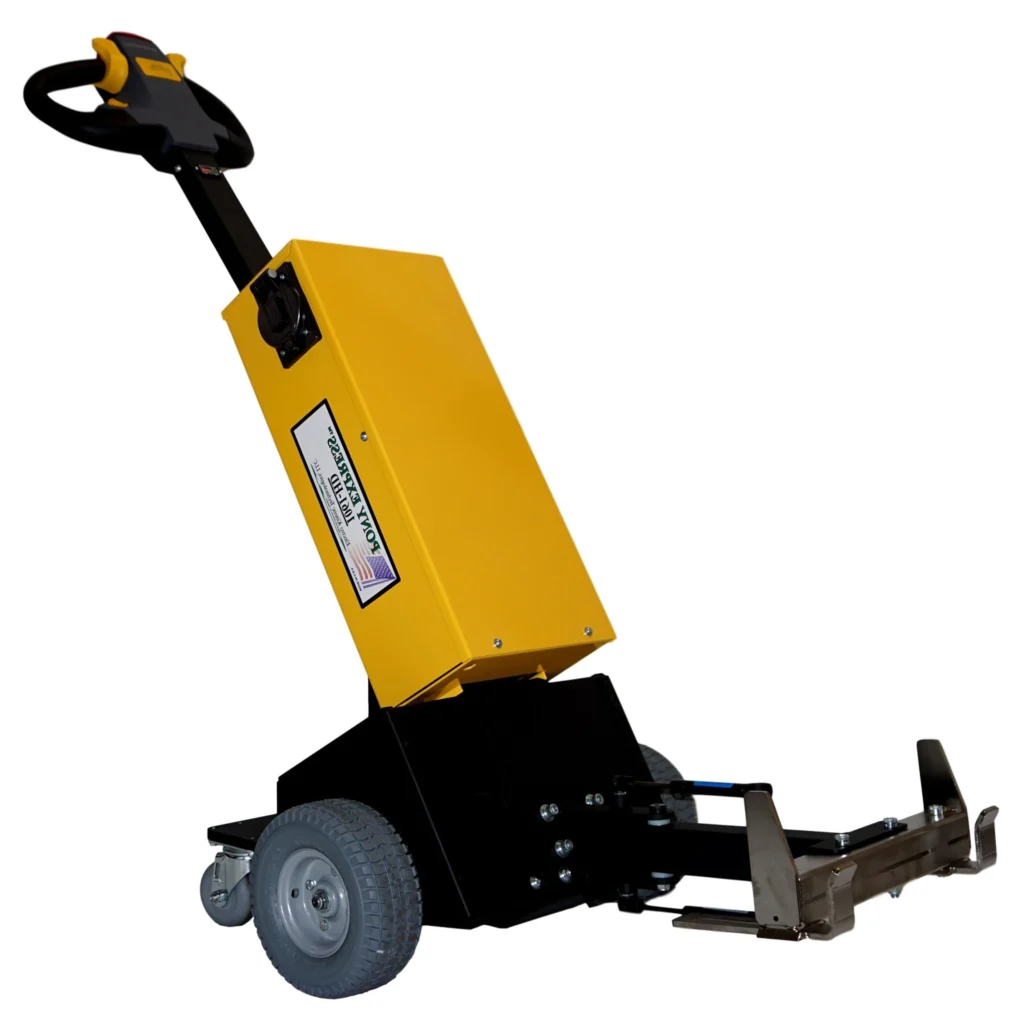
A battery powered tugger lives or dies on its battery, not its motor, so the first question is your shift pattern. Run one shift a day and a 35 Ah AGM tugger like the Pony Express 1061-HD standard is the right buy, since it gives about 8 hours of operation per charge and resets on a roughly 4 hour overnight recharge. Run two or three shifts and you want the 1061-HD Lithium instead, a 40 Ah lithium iron phosphate pack that is hot swappable and recharges in about 3 hours. Same tugger, same 2000 lb pull on a flat surface. The only thing the battery changes is whether the machine survives your day.
Three questions actually decide a powered-cart purchase. How long does a battery powered tugger run on one charge. How long does it take to recharge. And can one tugger cover back-to-back shifts, or do you need a swappable pack to keep it moving. Every number below is a published EK Tech Pony Express spec, not a generic chemistry claim. A multi-shift tugger battery is a logistics decision before it is a chemistry debate.
Last updated June 2026. We equip material-handling teams, we do not write your safety program. For battery charging, ventilation and powered-industrial-truck operation, follow your own facility rules and the OSHA guidance linked at the end.
Our picks at a glance
- Top Pick
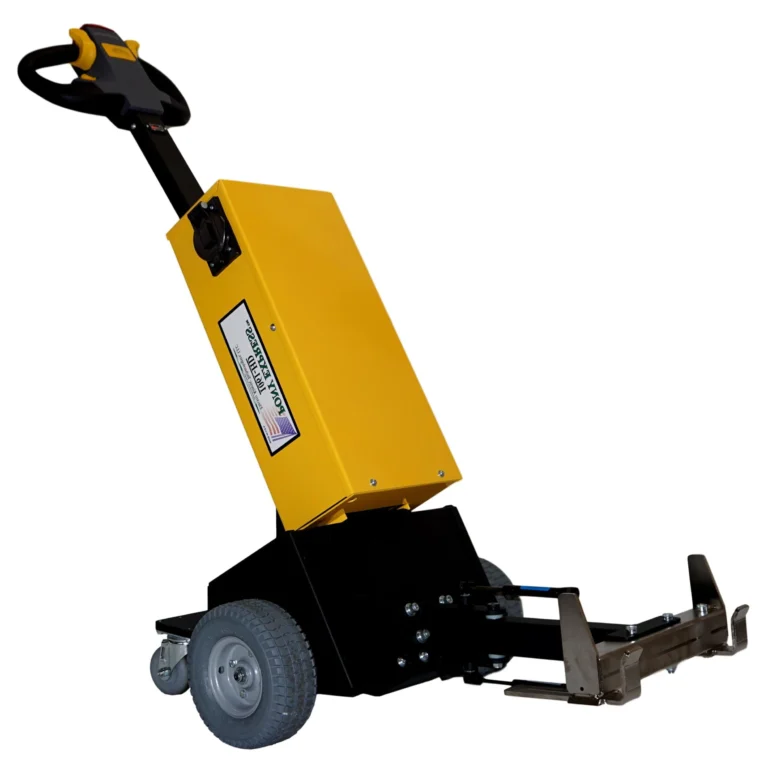 Pony Express 1061-HD Lithium Electric Powered Tugger
- Battery40 Ah, lithium iron phosphate, hot swappable
- Recharging TimeApproximately 3 hours
- Range per charge8 hours of operation (AGM equivalent run time before swap)
$7,199View details - Pony Express 1061-HD Electric Powered Tugger
- Battery35 Ah, AGM Deep Cycle
- Range per charge8 hours of operation
- Recharging TimeApproximately 4 hours
$4,752View details
How to pick a battery powered tugger in one line
Buy AGM for a single shift and lithium for multi-shift, then size the pack to your pulling load. That is the whole decision in one sentence. The battery, not the motor, is the variable that decides whether a powered tugger survives your shift pattern, because two tuggers with the identical 24V motor and the identical 2000 lb pull can behave completely differently once the charge clock starts.
One shift a day points to a 35 Ah AGM tugger like the 1061-HD standard. You run the shift, you plug it in overnight, the roughly 4 hour recharge finishes long before the next shift starts, and you repeat. Two or three shifts a day points to the 1061-HD Lithium, whose 40 Ah pack is hot swappable so a fresh battery drops in mid-day and the tugger never waits on a charger. It is the exact same 1061-HD tugger underneath, with the same 2000 lb pulling capacity. The lithium upgrade does not buy you more muscle. It buys you a way to keep that muscle running across more hours.
The three questions that decide it are simple. How long does it run on a charge. How long does it take to recharge. And can it cover back-to-back shifts. Answer those in order and the model picks itself.
How long does a battery powered tugger last on one charge?
The standard 1061-HD publishes 8 hours of operation on its 35 Ah AGM deep-cycle pack, which is one full shift, then needs approximately 4 hours to recharge. That is the headline runtime number straight off the EK Tech spec sheet, and it is the figure most buyers are really asking about when they ask how long does a motorized cart battery last.
Read "8 hours of operation" the right way. It is a duty-cycle figure, not 8 hours of continuous pulling at full load. A tugger spends a real shift in a mix of pulling, idling at a dock, creeping in an aisle and sitting parked while someone loads a cart. Actual runtime moves with how heavy the loads are, how much ramp grade is on the route, and how much of the shift the tugger sits idle. Pull 2000 lb up a grade all day and you will see less than 8 hours. Move light carts on a flat floor with normal idle time and the rating holds.
Recharge is the other half of the math, and it is the half people forget. The AGM pack takes approximately 4 hours on its onboard charger, so an overnight gap fully resets a single-shift tugger with hours to spare. Run eight, charge four, and you are back to a full battery by morning. That clean run-then-charge loop is exactly why one shift a day is the natural fit for AGM. There is a recharge window built into the day, and the AGM uses it.
The same runtime and recharge profile holds on the platform-cart side of the fleet. The 1031 and 1040 motorized platform carts both publish 8 hours of operation on a 35 Ah AGM pack with an approximately 4 hour recharge, the same numbers as the standard tugger. Spec a tugger or spec a battery operated cart, the single-shift AGM runtime answer is consistent across the powered line.
- 1061-HD standard tugger8 hr run, 4 hr overnight charge35 Ah AGM, 2000 lb pull, single-shift pick
- 1061-HD Lithium tugger8 hr run, 3 hr charge plus hot swap40 Ah lithium iron phosphate, 2000 lb pull, multi-shift pick
- 1031 platform cart8 hr run, 4 hr overnight charge35 Ah AGM, 2000 lb deck
- 1040 platform cart8 hr run, 4 hr overnight charge35 Ah AGM, 1000 lb deck
AGM vs lithium for a tugger - which battery should you buy?
Buy AGM when one shift a day is the real demand and buy lithium when you need a hot-swappable pack and a faster recharge for back-to-back shifts. This is a shift-pattern decision, not a "lithium is always better" decision, and treating it that way saves real money on the wrong jobs.
AGM earns its place on single-shift duty. The 35 Ah deep-cycle AGM pack in the 1061-HD standard costs less upfront, it is sealed and maintenance-free, and the charger is onboard so you plug the whole tugger in at a wall outlet with nothing to wheel around. For a facility with a predictable overnight gap, that is a proven, lower-cost setup that does the job and asks for nothing.
Lithium earns its premium when the day has no spare recharge window. The 1061-HD Lithium carries a 40 Ah lithium iron phosphate pack that is hot swappable, so a charged spare drops in mid-shift and the tugger is moving again in minutes instead of sitting on a 4 hour charge. It recharges in about 3 hours rather than 4, and it ships with a battery management system plus a Bluetooth app, so a supervisor can read state of charge on a phone instead of guessing from a dash light.
The tradeoff is straightforward. The lithium version costs $2,447 more on the exact same tugger and adds zero pulling capacity, since both pull 2000 lbs on a flat surface. You are paying for uptime, not for muscle, so if your shift pattern does not need the swap and the faster charge, that premium buys you nothing you will use.
There is no universal winner here, and that is the point. The generic lithium-versus-lead-acid chemistry comparisons are mostly written for golf carts and battery makers, and they answer a question a fleet buyer is not asking. Your real question is shift pattern first. There is also a middle path worth naming. If you want longer single-charge runtime but do not need lithium, you can upsize the AGM pack. The sibling 1062 tugger offers a 70 Ah AGM battery package as an option, which extends run time on the same AGM chemistry without moving to a lithium price class.
- Battery chemistry35 Ah AGM deep cycle vs 40 Ah lithium iron phosphatelithium pack is hot swappable
- Recharge timeApproximately 4 hours vs Approximately 3 hourslithium is about an hour faster
- Pack swapFixed onboard pack vs hot swappable packswap a charged spare to keep moving
- MonitoringBattery level indicator vs BMS plus Bluetooth appwatch state of charge on a phone
- Pulling capacity2000 lbs vs 2000 lbsidentical - lithium adds uptime not pull
- Price$4,752 vs $7,199$2,447 gap buys swappable runtime
1061-HD standard vs 1061-HD Lithium - the same tugger, two batteries
These are the identical 1061-HD tugger with a 2000 lb pull on a flat surface, so the choice between them is purely AGM single-shift versus lithium multi-shift. Both share the same high-torque 24V motor, the same adjustable hitch, the same welded steel frame, and the same 0 to 3 mph top speed. Both are in stock. Strip away everything they share and the comparison isolates one variable, the battery, which is exactly what makes this pair the cleanest way to see what a battery upgrade actually buys.
The standard 1061-HD runs a 35 Ah AGM deep-cycle pack rated for 8 hours of operation, recharges in approximately 4 hours on its onboard charger, and lists at $4,752. It is the single-shift pick. The lithium 1061-HD Lithium runs a 40 Ah lithium iron phosphate pack that is hot swappable, recharges in approximately 3 hours on an external charger, carries a battery management system with a Bluetooth app, and lists at $7,199. It is the multi-shift pick.
When you read the comparison table below, the deciding cells are the battery and recharging-time columns. Weight capacity is identical down the column, so it is not a tiebreaker here. The battery row and the recharge row are where the two tuggers actually diverge, and they are the rows that should drive your choice.
One thing the table cannot show is the swap workflow itself. The lithium pack being hot swappable means a charged spare pack lives on the charger while the tugger works, and when charge runs low an operator pulls the depleted pack and drops in the fresh one. The tugger never waits on the charger because the charger is always working on the pack that is off the machine. That spare-pack loop, not the one-hour-faster recharge, is the real reason a multi-shift floor reaches for lithium.
Battery powered tugger and platform cart comparison - 1061-HD standard vs 1061-HD Lithium plus two AGM platform carts
| Model | Battery | Range per charge | Recharging Time | Weight Capacity | Price |
|---|---|---|---|---|---|
| Pony Express 1061-HD (standard) | 35 Ah, AGM Deep Cycle | 8 hours of operation | Approximately 4 hours | 2000 lbs. on flat surface | $4,752 |
| Pony Express 1061-HD Lithium | 40 Ah, lithium iron phosphate, hot swappable | 8 hours of operation | Approximately 3 hours | 2000 lbs. on flat surface | $7,199 |
| Pony Express 1031 platform cart | 35 Ah, AGM, 8 hours of operation | 8 hours of operation | Approximately 4 hours | 2,000 | $3,295 |
| Pony Express 1040 platform cart | 35 Ah, AGM, 8 hours of operation | 8 hours of operation | Approximately 4 hours | 1000 lbs | $2,895 |
When the single-shift 1061-HD standard is the right buy
Pick the standard AGM 1061-HD when one shift a day is your real demand and the tugger can charge overnight. If your floor runs a single shift, has predictable downtime when the building is empty, and you are watching the budget, the AGM tugger is the correct call and it saves you $2,447 over the lithium version for the same 2000 lb pull. The overnight gap is a free recharge window, and AGM is built to use exactly that.
This is also the right pick if you are speccing a battery operated cart or tugger for a smaller operation where a second pack and a swap routine would be more process than the floor needs. One tugger, one charger, one overnight charge. The 1061-HD pair sits in our compact and small electric tuggers range, and the standard model is the entry point into it.
The 1061-HD battery pair - single-shift AGM vs multi-shift lithium
- #1Best overall
Pony Express 1061-HD Lithium Electric Powered Tugger
The multi-shift pick and the lithium half of the same-model pair. It is the exact same 1061-HD tugger with the same 2000 lb pull, but the AGM pack is swapped for a 40 Ah lithium iron phosphate battery that is hot swappable, recharges in approximately 3 hours, and ships with a battery management system plus a Bluetooth app to watch state of charge. For two or three shifts that cannot wait on a 4 hour AGM recharge, a charged spare pack drops in mid-day and the tugger keeps moving. In stock.
See price & details- Pros
- 40 Ah lithium iron phosphate pack is hot swappable, so a fresh battery keeps the tugger running mid-shift
- Approximately 3 hour recharge, about an hour faster than the AGM standard
- Battery management system plus Bluetooth app to read state of charge on a phone
- Same 2000 lb pull on a flat surface and same 24V motor as the standard 1061-HD, in stock
- Cons
- External charger lives off the machine rather than onboard like the AGM standard
- Overkill on a single-shift floor that already has a quiet overnight stretch to recharge in
- #2
Pony Express 1061-HD Electric Powered Tugger
The single-shift pick and the standard half of the same-model selector. A 35 Ah deep-cycle AGM pack runs about 8 hours of operation and recharges in roughly 4 hours on its onboard charger, which covers one full shift with an overnight charge. Same 2000 lb pulling capacity as the lithium version, about 2,388 dollars cheaper. The right call when one shift a day is the real demand and the tugger can charge overnight. In stock.
See price & details- Pros
- 35 Ah AGM deep-cycle pack rated for about 8 hours of operation, a full single shift per charge
- Sealed, maintenance-free AGM with an onboard charger, nothing extra to wheel around
- Approximately 4 hour recharge fits inside any overnight gap, in stock
- Lowest entry price on the pair for the full 2000 lb pull
- Cons
- Fixed onboard pack, no hot swap, so a 4 hour recharge stalls a multi-shift floor
- Approximately 4 hour recharge does not fit opportunity charging in short breaks
When the multi-shift 1061-HD Lithium is worth the upgrade
Choose the lithium 1061-HD when two or three shifts mean you cannot afford a 4 hour recharge window and you need a hot-swappable pack to keep the tugger moving. If the building runs back-to-back shifts with no quiet stretch long enough for an AGM to recharge, a single AGM tugger stalls out partway through the day. The swappable lithium pack solves that. Keep a spare on the charger, swap it in when charge runs low, and the tugger stays in service across the whole run.
The battery management system and Bluetooth app matter most in exactly this setting. Before a shift change, a supervisor can pull up state of charge on a phone and know whether to swap now or let it ride, instead of guessing from a dash indicator and getting caught mid-shift with a flat pack. That is the practical payoff of the 2,447 dollar premium, and it is why the lithium model is the multi-shift top pick. Route the multi-shift buyer straight to the multi-shift 1061-HD Lithium tugger product page to confirm stock and lead time.
Raphael's rule of thumb Count the recharge gap, not the shifts. If your floor has one stretch of at least 4 quiet hours in every 24, an AGM tugger fits and you keep the $2,447. The moment that 4 hour gap disappears, stop comparing chemistries and buy the lithium with one spare pack, because a tugger waiting on a charger is a worker walking loads by hand.
What is opportunity charging and does an AGM tugger support it?
Opportunity charging means topping up the battery during short breaks instead of one long charge, and it favors lithium because lithium tolerates frequent partial charges better than deep-cycle AGM. Rather than draining the pack and giving it one full overnight recharge, you plug in during lunch, breaks and shift changeovers to keep the charge level up through a long day.
For a multi-shift floor, the appeal is obvious. Opportunity charging stretches a single tugger across more hours without waiting for a full discharge-recharge cycle, because you are topping up in the gaps the day already has. On paper it sounds like a way to run AGM harder.
In practice, AGM is the weaker fit for it. A deep-cycle AGM pack is happiest on a full discharge followed by a full recharge, and its approximately 4 hour recharge simply does not slot into a coffee break or a 20 minute changeover. You cannot meaningfully top up a 4 hour AGM charge in the gaps a shift gives you, so opportunity charging an AGM tugger mostly means a lot of short plug-ins that never add up to a full pack.
Lithium fits the pattern far better. The 1061-HD Lithium recharges in about 3 hours, and lithium iron phosphate handles frequent partial top-ups without the cycle penalty that punishes AGM. Pair that with the swappable design and the battery management system and the multi-shift math gets clean. The takeaway is simple. If your plan is to charge in gaps rather than overnight, that points to lithium, and a charged spare pack is a cleaner answer than babysitting a charge clock all day. Opportunity charging a warehouse cart works best when the chemistry was built for it.
Does the same battery math apply to motorized platform carts?
Yes. The AGM runtime and recharge profile is the same across the powered fleet, so a 35 Ah AGM platform cart runs about 8 hours and recharges in roughly 4 hours just like the tugger. If you are speccing a battery operated cart instead of a tugger, the runtime and charging logic does not change. The same single-shift-versus-multi-shift question applies, and AGM answers it the same way.
The numbers line up cart for cart. The 1031 platform cart carries a 35 Ah AGM pack rated for 8 hours of operation with an approximately 4 hour recharge behind a 2,000 lb deck, and lists at $3,295. The 1040 platform cart runs the same 35 Ah AGM pack, the same 8 hours of operation and the same approximately 4 hour recharge behind a 1,000 lb deck, at $2,895, the most affordable powered model here. Both are clean single-shift duty cycles, the same way the standard tugger is.
The cart side has its own AGM upsize path too. The 1040-E Extreme carries a larger 44 Ah AGM pack and is designed for up to 10 miles of continuous operation, which is the cart-side way to buy more range without moving to lithium, the same idea as the 70 Ah AGM option on the 1062 tugger. So the upsize-the-AGM lever exists on both the tugger and the cart side of the line.
Battery, runtime and charging are one decision, and re-speccing the cart by deck and capacity is another. The sibling guide to how to spec a motorized platform cart by load capacity and deck size walks the full ladder from 1,000 lb to 4,000 lb. To browse the carts themselves, see our battery powered platform carts.
How to size a tugger battery to your job
Match the battery to shift pattern first, then confirm the pulling capacity covers your heaviest cart, because battery sizing scales with load. Work it in three steps and the right model falls out without guesswork.
Step one, count your shifts. One shift a day points to AGM, like the 1061-HD standard, which recharges overnight. Two or three shifts points to lithium or a spare-pack plan, like the 1061-HD Lithium with its hot-swappable 40 Ah pack. This is the first cut because it eliminates half the lineup before you look at anything else.
Step two, check the recharge window you actually have. If there is a real overnight gap of 4 hours or more, the AGM recharge fits inside it and AGM is fine. If there is no overnight gap, that is a lithium signal, because only the faster lithium recharge and the hot swap keep a tugger running without one.
Step three, confirm pulling capacity. The 1061-HD pair pulls 2000 lbs on a flat surface, which covers the large majority of cart trains. Heavier loads move to a larger AGM tugger. The 1065 is rated to 5000 lbs on a flat surface and ships with a 70 Ah AGM pack as standard, which is how AGM scales with capacity. Inside the same AGM family, the battery grows as the pulling rating grows, so a bigger pull comes with a bigger pack rather than a chemistry change.
The rule that ties it together is short. Battery first, capacity second. Decide your shift pattern and recharge window, then confirm the pull rating covers your heaviest load. To match a model to your answer, browse the full electric tugger lineup or see every motorized cart and tugger we carry in one place. If your floor is a retail or store setting rather than a warehouse, our buyer guide to motorized shopping carts for stores covers that side of the line.
- Step 1 - count your shiftsOne shift a dayAGM 1061-HD standard, recharge overnight
- Step 1 - count your shiftsTwo or three shifts1061-HD Lithium or a spare AGM pack plan
- Step 2 - check your recharge windowOvernight gap availableAGM 4 hour recharge fits
- Step 2 - check your recharge windowNo overnight gaplithium 3 hour recharge plus hot swap
- Step 3 - confirm pulling loadUp to 2000 lbs1061-HD pair covers it
- Step 3 - confirm pulling loadUp to 5000 lbsstep up to the 70 Ah AGM 1065
Frequently asked questions
How long does a battery powered tugger last on one charge?
The standard Pony Express 1061-HD publishes 8 hours of operation on its 35 Ah AGM deep-cycle pack, which covers one full shift. That figure is a duty cycle, not 8 hours of continuous pulling, so real runtime moves with load weight, ramp grade and how much of the shift the tugger sits idle. Recharge takes approximately 4 hours on the onboard charger, so an overnight gap fully resets a single-shift tugger. The 1031 and 1040 platform carts publish the same 8 hour AGM runtime.
How long does a motorized cart battery take to recharge?
On the AGM models it is approximately 4 hours. The standard 1061-HD tugger, the 1031 platform cart and the 1040 platform cart all carry a 35 Ah AGM pack with an approximately 4 hour recharge on an onboard charger, so an overnight gap fully resets them. The lithium 1061-HD recharges faster, in approximately 3 hours, on an external charger with a battery management system. That hour of difference, plus a hot-swappable pack, is what lets the lithium model cover shifts the AGM cannot.
Is a lithium tugger battery worth the extra cost over AGM?
Only if your shift pattern needs it. The 1061-HD Lithium costs $2,447 more than the standard 1061-HD and adds zero pulling capacity - both pull 2000 lbs on a flat surface. The premium buys a 40 Ah lithium iron phosphate pack that is hot swappable, an approximately 3 hour recharge instead of 4, and a battery management system with a Bluetooth app. For a single shift with an overnight charge window, that is money you would not use. For two or three shifts with no recharge gap, it is what keeps the tugger running.
Which tugger battery do I need for a two or three shift operation?
A hot-swappable lithium pack, which on the 1061-HD pair means the 1061-HD Lithium. Its 40 Ah lithium iron phosphate battery lets a charged spare drop in mid-day so the tugger never waits on a charger, and it recharges in about 3 hours rather than the AGM's 4. A standard AGM tugger stalls partway through a multi-shift day because its approximately 4 hour recharge needs a quiet window the floor does not have. Keep one spare pack on the charger and the lithium tugger stays in service across back-to-back shifts.
Can you run a battery operated cart on opportunity charging?
Opportunity charging means topping up during short breaks instead of one long charge, and it suits lithium far better than AGM. A deep-cycle AGM pack is happiest on a full discharge-recharge cycle, and its approximately 4 hour recharge does not slot into a coffee break, so opportunity charging an AGM tugger rarely adds up to a full pack. The 1061-HD Lithium recharges in about 3 hours and lithium iron phosphate tolerates frequent partial top-ups, so if your plan is to charge in gaps rather than overnight, that is a lithium signal. A charged spare pack is cleaner than babysitting a charge clock.
Does the 1061-HD Lithium pull more than the standard 1061-HD?
No. Both pull 2000 lbs on a flat surface. They are the identical 1061-HD tugger with the same 24V motor and the same hitch, so the lithium upgrade changes nothing about pulling capacity. What it changes is uptime - a 40 Ah hot-swappable lithium iron phosphate pack with an approximately 3 hour recharge and a Bluetooth-monitored battery management system, versus the standard 35 Ah AGM pack with an approximately 4 hour recharge. You pay $2,447 more for swappable runtime, not for more muscle.
Sources & references
- OSHA - Powered Industrial Trucks battery charging and safe operation Authority
- U.S. Department of Energy - lithium-ion vs lead-acid battery characteristics Authority
- EK Tech Pony Express 1061-HD Electric Powered Tugger - specifications
- EK Tech Pony Express 1061-HD Lithium Electric Powered Tugger - specifications
- EK Tech Pony Express 1031 Motorized Platform Carts - specifications
- EK Tech Pony Express 1040 Motorized Platform Carts - specifications
- EK Tech Pony Express 1065 Electric Powered Tugger - specifications