

 4.7
4.7
What a Wheelchair With a Lifting Seat Does and Who It Helps
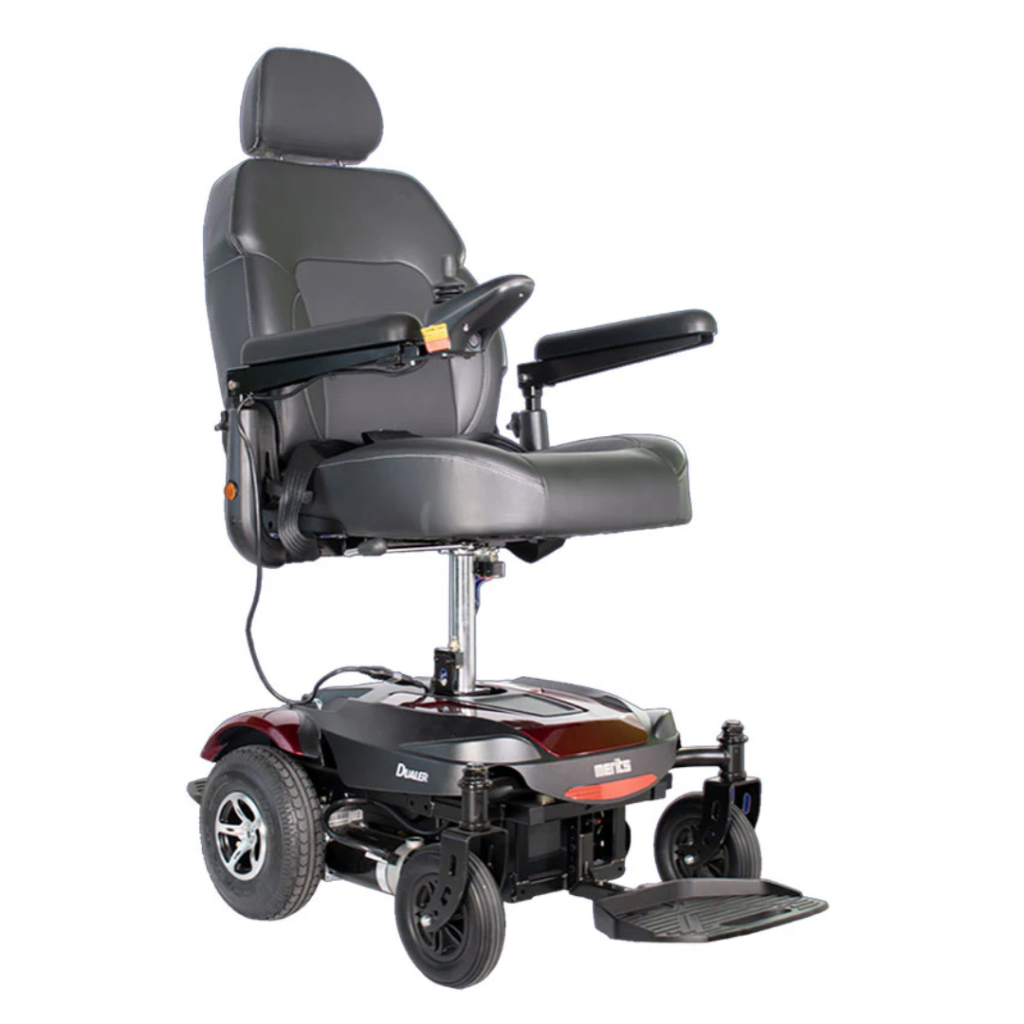
A wheelchair with a lifting seat is a power chair that raises the whole seat straight up on a motor, usually 5 to 10 inches, so you can reach a high shelf, transfer at counter height, or talk to someone face to face without standing. The seat rises, you stay sitting, and a control on the joystick brings it back down. That single feature changes what a power chair can do at home.
An elevating seat deserves the most thought from a rider still deciding whether the feature pays off, not from the shopper already ready to check out. If you want to skip the explainer and look at live inventory, you can shop the full lineup of electric wheelchairs with elevating seats right now. For everyone else, a power seat elevator raises you on demand, lifts a set number of inches, works differently from tilt and recline, helps with everyday reach and transfers, and carries a 2026 price worth knowing before you buy.
Last updated June 2026.
Our picks at a glance
- Top Pick
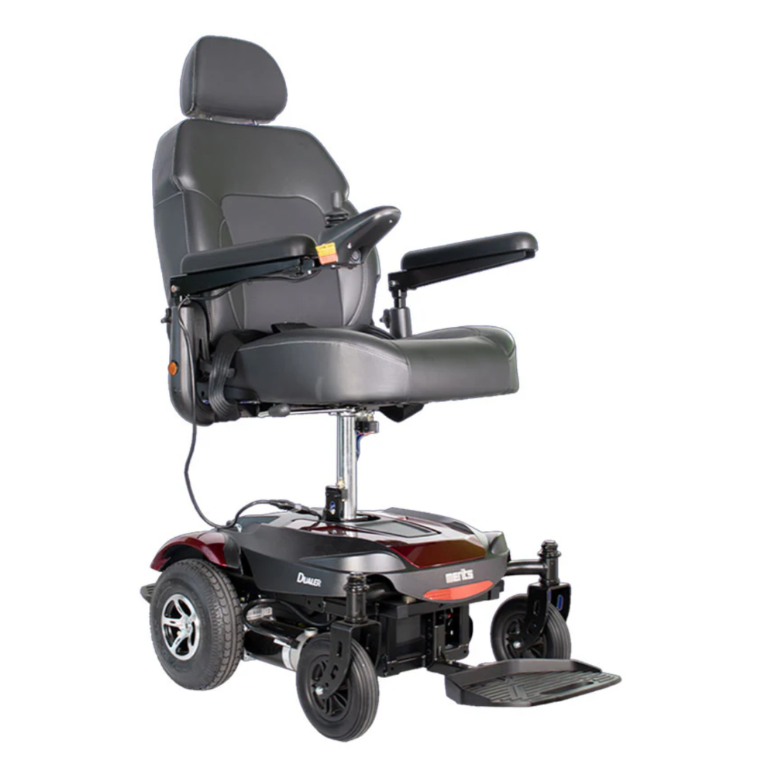
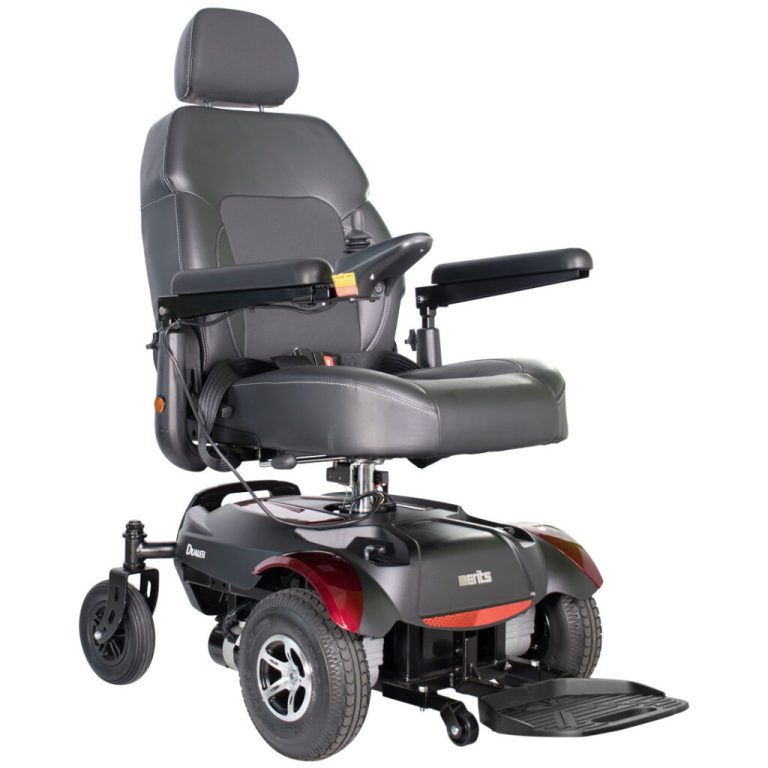 Merits Dualer with Power Seat Lift Power Chair – P312
- Seat Elevation5"
- Weight Capacity300 lbs.
- Seat Width16" or 18"
$3,423View details 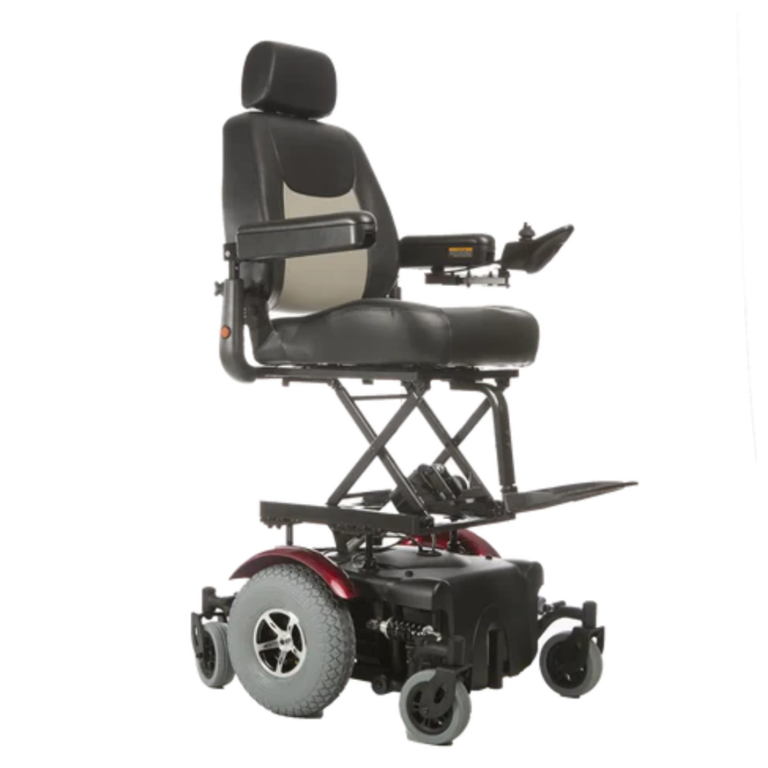 Merits Vision Super Heavy Duty Electric Wheelchair with Power Elevating Seat Option – P327
- Seat Elevation10" - P3274 w/ lift
- Weight Capacity450 lbs., 400 lbs. w/ lift
- Seat Width20" - 24"
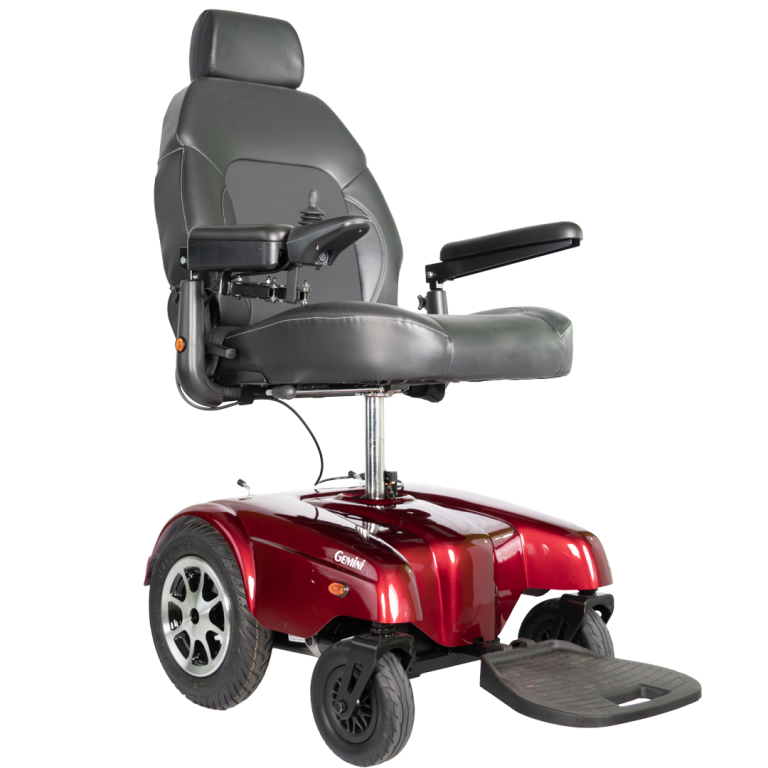
$4,279View details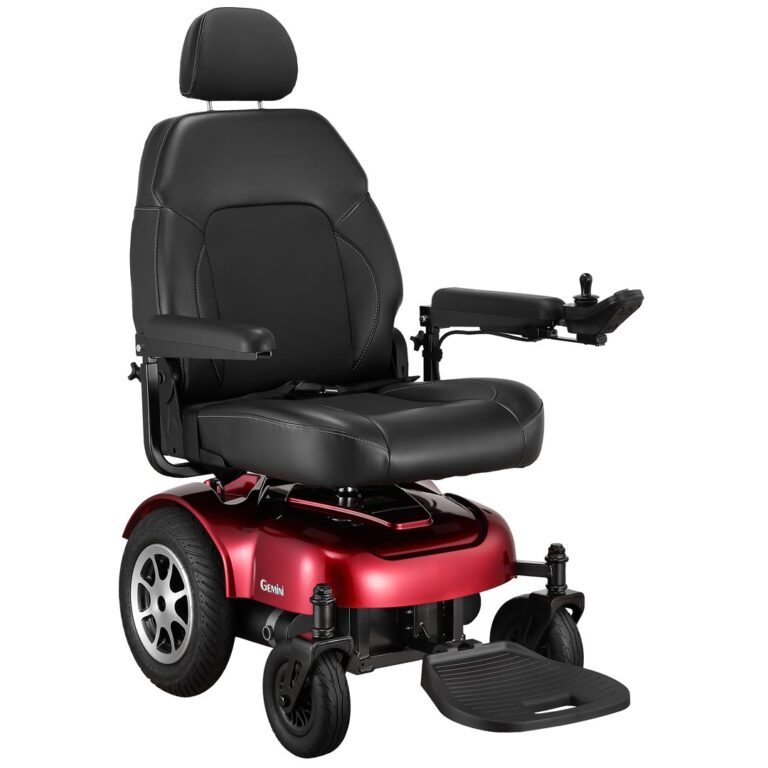 Merits Gemini Heavy Duty Power Wheelchair with Power Elevating Seat Option – P301
- Power Elevating SeatOptional upgrade
- Weight Capacity450 lbs.
- Seat Width21.75"
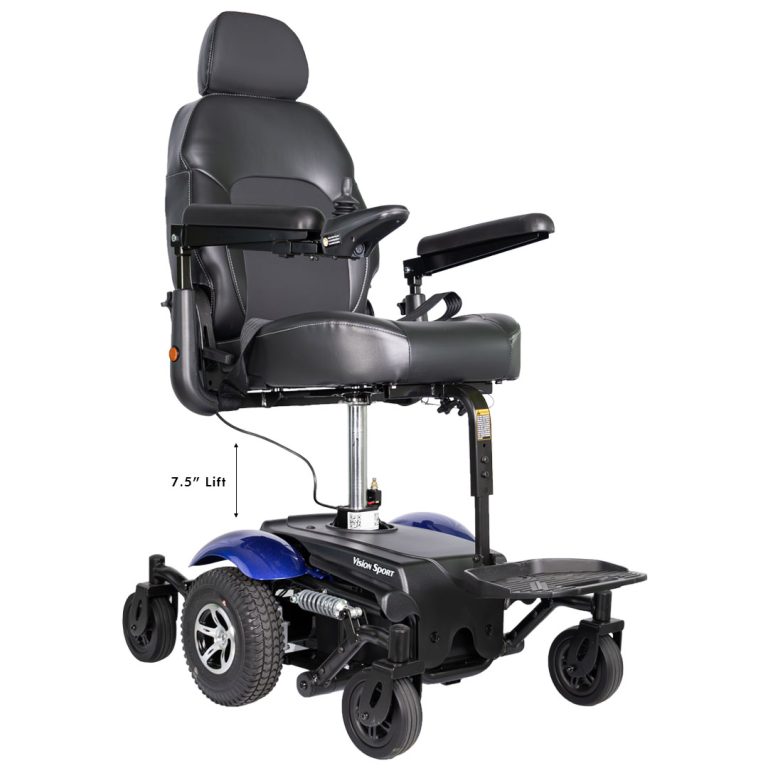
$3,207View details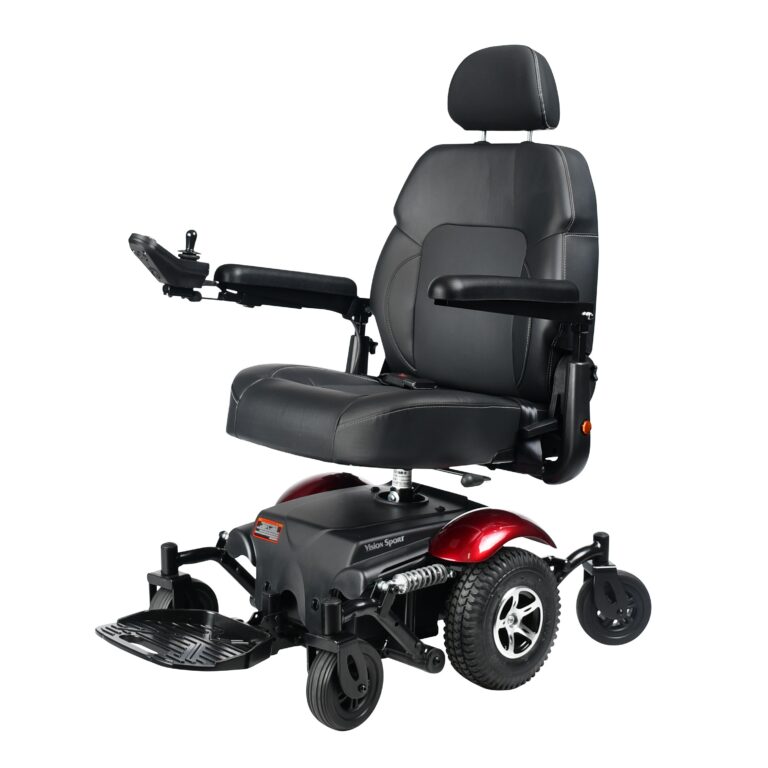 Merits Vision Sport Mid-Wheel Drive Power Wheelchair with Power Elevating Seat Option – P326
- Power Elevating SeatOptional
- Weight Capacity300 lbs.
- Seat Width16" - 20"
$2,867View details
What does a wheelchair with a lifting seat actually do?
A wheelchair with a lifting seat raises the entire seat base straight up on a powered actuator so the rider can reach, transfer, and make eye contact without leaving the chair. You press a control, a motor drives the seat vertically, and the seat travels up 5 to 10 inches depending on the model. You do not stand and the chair does not fold or tilt. The seat simply rises and lowers on command.
The mechanism is a linear actuator, the same kind of electric ram that raises a hospital bed or a standing desk. On a power wheelchair with seat elevation like the Merits Dualer P312, that actuator sits under the seat pan and pushes the whole captain seat upward as one piece. The rider stays seated and supported the entire time, and nothing about the lift asks you to bear weight on your legs, which is the point for someone who cannot stand to reach.
Lift travel is measured in inches of vertical rise. On the chairs we carry, published travel runs from 5 inches on the Dualer up to 10 inches on the Vision Super P327 with the P3274 lift fitted. A true power seat elevator is not the same as a manual seat-height adjustment, which is set once at fitting and stays there. The lift moves on demand from the joystick, as many times a day as you want. A lifting seat here means the powered, ride-along kind.
How much does a power seat actually lift, in inches?
The elevating chairs we stock lift between 5 and 10 inches of vertical seat travel, and only the two models that publish a lift-travel figure should be trusted on the exact number. The Merits Dualer P312 lifts 5 inches, published as a standard spec. The Merits Vision Super P327 lifts 10 inches with the P3274 lift fitted. Those are the verified figures from each manufacturer spec sheet.
The other two mapped chairs offer power elevation as an option, and their spec sheets publish no elevation-in-inches value. The Merits Gemini P301 lists the power elevating seat as an optional upgrade. The Vision Sport P326 lists it as an option too. We will not invent an inch figure for either one, so both are shown as optional in the comparison rather than assigned a number we cannot source.
Inches translate into real reach. A 10 inch rise puts a seated rider close to standing eye level and within reach of an upper kitchen cabinet, the kind of shelf that is otherwise a two-step-stool job. A 5 inch rise is enough to clear a kitchen counter or a bathroom vanity for a transfer and to lift your sightline above a standing crowd. Even the shorter travel changes what a rider can do without asking for help.
More lift travel usually means a taller raised seat-to-floor height, which matters for high transfers. The Vision Super raises its seat-to-floor height up to 34 inches with the lift fitted, against a base of 22 inches, so it can meet a tall bed or a high transfer surface. The tradeoff is that the same height that helps you reach also sits the rider higher off the ground, which is exactly why the next safety section matters.
Seat lift vs tilt vs recline - what is the difference?
Seat elevation lifts the whole seat straight up, tilt rotates the seat and back together as one unit, and recline opens the seatback angle so you lean further back. They are three separate powered features that solve three different problems, and most riders shopping for a lifting seat want elevation, not the other two.
Seat elevation moves the seat vertically and keeps the rider upright at a higher height. The hips, knees, and back stay in the same relationship to each other while only the floor gets farther away. That is what gives you reach, eye-level conversation, and a counter-height transfer.
Tilt-in-space rotates the seat and backrest as one unit, so the whole seated position pivots backward while the hip and knee angles stay fixed. Riders use it to shift pressure off the seat, manage posture, and rest without sliding forward. Recline changes only the seatback angle, dropping the back away from the seat so you can lean back and rest, the way a recliner chair works. Neither one raises you up the way elevation does.
The distinction matters the moment you read a spec sheet, because these are three separate powered features and a chair can carry one, two, or all three. Choose elevation when the goal is reach, eye-level conversation, and counter-height transfers. Choose tilt or recline when the goal is pressure relief or postural support. Most riders shopping a lifting seat want elevation, and the chairs here are built around that one motion.
Who benefits from an electric wheelchair that raises you up?
An electric wheelchair that raises you up helps anyone who needs to reach high, transfer at counter height, or hold a conversation at eye level. The feature earns its place through the small daily moments that otherwise mean asking someone for help. Here are the everyday tasks our customers tell us the lift gives back.
Upper kitchen cabinets come back into range. The top shelf where the everyday plates and glasses live is the classic two-step-stool job for a seated rider. With the seat up a few inches, you reach it yourself and put it back yourself.
Cooking at the stove and the over-range microwave gets easier. A raised seat lets you see into a tall pot, stir on a back burner, and reach the microwave mounted above the range without leaning into hot surfaces.
Counter dining and bar-height tables stop being off-limits. Raising the seat to counter height means you can sit with everyone at a kitchen island or a high cafe table instead of being seated below the surface.
Eye-level conversation changes the social footing of a room. Talking face to face at a reception desk, across a kitchen island, or with standing family at a gathering puts you back in the exchange at the same height as everyone else instead of looking up all day.
Transfers get safer for everyone. Matching seat height to a bed, a sofa, a car seat, or a toilet turns an uphill or downhill move into a level slide across, which is easier on the rider and on anyone assisting.
Closet shelves and the coat rod open up. A raised seat reaches the rod where the coats hang and the shelf above it where the seasonal bins sit, so getting dressed and putting things away no longer needs a second person.
Wall controls land within reach. Light switches, thermostats, a high wall outlet, and an alarm keypad are all mounted for a standing adult. Lifting the seat puts them at your hand instead of out of range.
The bathroom vanity and medicine cabinet become usable. A 5 inch rise clears most vanity counters so you can use the sink at a normal height and reach the mirror cabinet where the daily medications and toiletries live.
Shopping in person gets its independence back. A raised seat reaches a mid-shelf product in a store aisle, a hook display, and the card reader on a tall checkout counter, so a trip out does not turn into flagging down staff for every item.
Laundry is less of a reach. A top-loading washer lid, the dryer drum at the back, and the shelf where the detergent sits all come within range when the seat is up, so a routine chore stays a one-person job.
Greeting people at the door is the moment riders mention most. Standing height to open the door, hand off a delivery, or hug family arriving puts you eye to eye for the hello instead of meeting everyone from below.
The tradeoff is that elevation is not free utility. It adds cost, it adds some weight to the chair, and the elevating models are designed to hold to a reduced speed while the seat is up. For most riders the reach, transfer, and eye-level gains are worth all three. The next two sections cover the speed limit and the price so you can weigh it with eyes open.
Is it safe to drive a wheelchair with the seat raised?
The elevating Merits chairs we carry are designed to reduce drive speed while the seat is raised, which is what keeps a short move at counter height manageable. A raised seat sits higher and is less stable than a seated ride, so the control system is built to hold your speed down until you bring the seat back. Confirm that elevated-speed behavior on the exact model and configuration you buy, because the optional-lift Gemini and Vision Sport are not verified to share the standard-lift speed reduction, and lower the seat before covering any real ground regardless.
The physics are simple. Raising the seat raises the rider's center of gravity, and a higher center of gravity is easier to tip than a low one. To keep that from becoming a hazard, these chairs are designed to hold to a reduced creep speed while the seat is elevated. The full speed is 5 mph at normal seat height, and the elevated pace is a slow walk-along speed, enough to reposition at a counter, not enough to cover ground.
Practical guidance still applies. Lower the seat fully before driving any real distance or over uneven ground, a threshold, a ramp, grass, or a curb cut. The creep speed is there for short repositioning moves while elevated, not for travel. Use the lift to reach and transfer, then drop it to drive. The structural backstops are anti-tip wheels and a low base design. The Dualer P312 runs 3 inch rear anti-tippers, the Vision Sport P326 a mid-wheel-drive base built low to the ground, and every chair in this set keeps the base planted through the lift's range.
Raphael's rule of thumb Treat the lift like a parked-car feature. I tell customers to raise the seat when the wheels are stopped and to drop it before they roll more than a few feet. The creep speed exists so you can nudge up to a counter, not so you can cross a room with the seat up. If you find yourself driving elevated to save a step, lower it first. The chair is happiest, and safest, ridden low. Always defer to your model's manual for its exact elevated-speed limit.
In-stock Merits power chairs with a lifting seat compared
We carry four in-stock Merits power chairs that raise the seat, and they range from the $2,867 Vision Sport with an optional lift to the $4,279 Vision Super with a 10 inch lift. All four sit in the elevating-seats collection, all four reach 5 mph at normal height, and only the Dualer ships the lift as standard rather than as an upgrade.
The Dualer P312 is the cleanest answer because the lift is built into the model with a published 5 inch travel. The Vision Super P327 has the longest 10 inch lift and the highest 450 lb capacity, dropping to 400 lbs once the lift is fitted. The Gemini P301 and Vision Sport P326 carry power elevation as an optional upgrade with no published inch figure, so they are the entry path rather than the lift-first pick. Read the table below by what matters to you. Lift travel if reach is the priority, weight capacity if you need a higher rating, turning radius if your rooms are tight, and price if budget is the deciding line.
In-stock Merits power wheelchairs with a lifting seat compared - specs pulled verbatim from each model spec sheet
| Model | Power seat elevation | Weight capacity | Seat width | Turning radius | Max speed | Price |
|---|---|---|---|---|---|---|
| Merits Dualer P312 | 5" | 300 lbs. | 16" or 18" | 21" | 5 mph | $3,423 |
| Merits Vision Super P327 | 10" - P3274 w/ lift | 450 lbs., 400 lbs. w/ lift | 20" - 24" | 21" | 5 mph | $4,279 |
| Merits Gemini P301 | Optional upgrade | 450 lbs. | 21.75" | 35" | 5 mph | $3,207 |
| Merits Vision Sport P326 | Optional | 300 lbs. | 16" - 20" | 20" | 5 mph | $2,867 |
In-stock Merits power chairs with a lifting seat
- #1Best overall
Dualer with Power Seat Lift Power Chair - P312
The clearest in-stock answer to what an elevating-seat power chair does, because the power seat lift is built into the model with a published 5 inch travel rather than sold as an optional upgrade. It carries 300 lbs, comes in a 16 or 18 inch seat width, and turns in a compact 21 inch radius that suits indoor reach and transfer use. At $3,423 it sits mid-band and is the pick for a rider who wants elevation as the headline feature without decoding optional-upgrade pricing.
See price & details- Pros
- Power seat lift is standard with a published 5 inch rise, not an upcharge
- Compact 21 inch turning radius for indoor reach and transfers
- Lift is built into the model, so elevation is included rather than an add-on
- 5 inch rise clears most counters and vanities for everyday reach
- Cons
- 5 inch lift is shorter than the Vision Super's 10 inch travel
- 16 or 18 inch seat width is narrower than the heavy-duty frames
- No extra-wide seat option for a bariatric rider
- #2
Vision Super Heavy Duty with Power Elevating Seat - P327
The longest-travel lift in the set and the heavy-duty pick at $4,279. Its optional 10 inch P3274 lift is the high end of the lift-range story and raises the seat-to-floor height up to 34 inches for a high transfer or a tall reach. Capacity is rated at 450 lbs as a standard chair and drops to 400 lbs once the lift is fitted, because the lift mechanism takes part of the structural budget. It comes in a 20 to 24 inch seat width, turns in a 21 inch radius, and runs 5 mph at normal height. It is the chair for a larger rider who also wants maximum reach.
See price & details- Pros
- Longest published lift at 10 inches with the P3274 lift fitted
- Highest capacity in the set at 450 lbs
- Raises seat-to-floor height up to 34 inches for a high transfer
- Wide 20 to 24 inch seat width for a larger rider
- Cons
- Capacity is rated 400 lbs with the 10 inch lift fitted, down from 450 lbs as a standard chair
- Larger footprint than the compact Dualer
- Lift is an optional add-on rather than a standard fitting
- #3
Gemini Heavy Duty Power Wheelchair - P301
An entry path into an elevating chair where power elevation is an optional upgrade rather than a published-inches base feature. It has the widest captain seat in the group at 21.75 inches and a 450 lb capacity, with a 35 inch turning radius that wants a bit more room than the others. The spec sheet publishes no elevation-in-inches value, so it is shown as optional rather than given an invented number. At $3,207 base it suits a rider who wants the widest seat and treats elevation as a nice-to-have add-on. Read our full Gemini P301 review for the complete picture.
See price & details- Pros
- Power elevating seat available as an optional upgrade
- Widest captain seat in the group at 21.75 inches
- 450 lb capacity in a non-bariatric frame
- Cons
- Power elevation is an optional add-on, not a standard feature
- Largest turning radius here at 35 inches, so it wants more room
- No published lift-travel figure since elevation is an option
- #4
Vision Sport Mid-Wheel Drive Power Wheelchair - P326
The lowest-price entry point to an elevating-seat chair at $2,867 and the tightest turner here at a 20 inch radius. Mid-wheel drive keeps the base low for stability, and the power elevator is offered as an option, so the spec sheet publishes no elevation-in-inches figure and we show it as optional rather than assigning a number. It carries 300 lbs in a 16 to 20 inch seat width. It is the pick for a tighter budget or a tight-room footprint where elevation is an add-on you may grow into.
See price & details- Pros
- Power elevating seat available as an option
- Tightest turning radius here at 20 inches for tight rooms
- Low mid-wheel-drive base for stability
- Cons
- Power elevation is an optional add-on, not a standard feature
- 300 lb capacity, the lightest-duty frame here
- Compact frame, so no extra-wide seat option
Merits Dualer P312 - the standard-lift pick
The Dualer P312 is the clearest in-stock answer at $3,423 because the power seat lift is standard, not an upcharge, with a published 5 inch rise. It carries 300 lbs, comes in a 16 or 18 inch seat width, turns in a compact 21 inch radius that suits indoor reach and transfer use, and runs 5 mph at normal height. For a rider who wants elevation as the headline feature without spec-sheet guessing, this is the pick.
Merits Vision Super P327 - the longest lift and heavy-duty pick
The Vision Super P327 at $4,279 offers the longest 10 inch lift and the highest 450 lb capacity in the set. Capacity is rated at 450 lbs as a standard chair and drops to 400 lbs once the P3274 lift is fitted, because the lift mechanism takes part of the structural budget. The 10 inch lift raises the seat-to-floor height up to 34 inches for a high transfer or a tall reach. It comes in a 20 to 24 inch seat width, turns in a 21 inch radius, and runs 5 mph at normal height. It is the chair for a larger rider who also wants maximum reach. If you are sizing primarily for weight rather than lift, our guide to heavy duty power wheelchairs for higher weight capacities is the better starting point.
Merits Gemini P301 and Vision Sport P326 - the optional-lift path
The Gemini P301 at $3,207 and the Vision Sport P326 at $2,867 both offer power elevation as an optional upgrade with no published inch figure, which makes them the entry path into an elevating chair. They are the chairs to look at when elevation is a nice-to-have rather than the main reason you are buying.
The Gemini P301 has the widest captain seat in the group at 21.75 inches and a 450 lb capacity, with the lift offered as an optional upgrade. It turns in a 35 inch radius, the largest here, so it wants a bit more room. If you want the full picture on that chair, read our full Merits Gemini P301 review. The Vision Sport P326 is the lowest-price entry at $2,867 and the tightest turner at a 20 inch radius, with a 300 lb capacity and the lift as an option. Both show the lift as optional because neither spec sheet publishes an elevation-in-inches value, and we will not assign an invented number. Pick this path for a tighter budget or a tight-room footprint where elevation is an add-on you may grow into.
How much does a wheelchair with a lifting seat cost in 2026?
An in-stock elevating power chair from our lineup runs 2,867 to $4,279 in 2026, with the standard-lift Dualer at $3,423 sitting in the middle of that band. Those are the current listed prices for the four mapped Merits chairs, and they bracket what a cash-pay buyer should expect to pay for a power chair that raises you up.
The spread is driven by lift travel, weight capacity, drivetrain, and seat width. The Vision Super sits at the top of the band because it combines the longest 10 inch lift with the highest 450 lb capacity and a mid-wheel-drive base. The Vision Sport sits at the bottom because it is the lightest-duty chair with the lift offered as an option. The Dualer lands in the middle by shipping the lift as standard on a 300 lb frame.
Watch the optional-lift math. The Gemini and Vision Sport prices above are base prices, and the power elevating seat is an upgrade on each, so the as-equipped price with the lift will sit higher than the figure shown. The Dualer's $3,423 already includes its lift, which is part of why it is the cleanest price to reason about. To compare every model and check live pricing as it changes, compare every power chair that raises you up in the collection, where every figure stays current.
Sources & references
What is an electric wheelchair with an elevating seat, in one line?
An electric wheelchair with an elevating seat is a powered chair whose whole seat rises straight up on a motor, 5 to 10 inches, so the rider can reach, transfer, and talk at eye level without standing. The rise is vertical and separate from tilt, which rotates the seat, and recline, which opens the back angle.
That is the entire concept in a sentence. If you want to see the in-stock lineup that matches it, you can shop the full lineup of electric wheelchairs with elevating seats, or if your real constraint is weight capacity, read the Merits Atlantis bariatric power wheelchair breakdown and our bariatric power wheelchair sizing guide by rider weight and seat width. The Atlantis P710A carries up to 600 lbs but does not offer a power seat elevator, so it is a capacity comparator here, not an elevating pick.
Frequently asked questions
How many inches does a wheelchair with a lifting seat raise you?
It depends on the model, but the elevating power chairs we carry lift between 5 and 10 inches of vertical seat travel. The Merits Dualer P312 lifts 5 inches as a standard feature, and the Merits Vision Super P327 lifts 10 inches with the P3274 lift fitted. The Gemini P301 and Vision Sport P326 offer power elevation as an option, and their spec sheets publish no elevation-in-inches figure, so we do not assign them a number. A 10 inch rise puts a seated rider near standing eye level and within reach of an upper kitchen cabinet.
What is the difference between a seat elevator and a tilt or recline wheelchair?
They are three separate powered features. Seat elevation lifts the whole seat straight up and keeps you upright at a higher height, which gives you reach, eye-level conversation, and counter-height transfers. Tilt-in-space rotates the seat and backrest together as one unit to shift pressure and manage posture without changing your hip angle. Recline opens only the seatback angle so you can lean back and rest. They are three distinct features, so a chair can carry one, two, or all three. Choose elevation for reach and transfers, and tilt or recline when the need is pressure relief or postural support.
Can you drive a power wheelchair while the seat is elevated?
Yes, but only slowly. The elevating Merits chairs we carry are designed to reduce drive speed to a slow creep while the seat is raised, because a raised seat lifts the center of gravity and is less stable than a seated ride. Plan on the full 5 mph being available with the seat down. The creep speed is meant for repositioning at a counter, not for travel, so lower the seat fully before driving any real distance or over uneven ground. Anti-tip wheels and a low base design are the structural backstops. Confirm the elevated-speed behavior on your specific model and check the manual for its exact limit.
How much does an electric wheelchair that raises you up cost?
An in-stock elevating power chair from our lineup runs 2867 to 4279 dollars in 2026. The Vision Sport P326 is the lowest at $2,867 with an optional lift, the Gemini P301 is $3,207 with an optional lift, the standard-lift Dualer P312 is $3,423, and the Vision Super P327 is $4,279 with the longest 10 inch lift. The Gemini and Vision Sport prices are base prices, so the power elevating seat upgrade adds to those figures, while the Dualer's price already includes its 5 inch lift.
Which Merits power chair has the longest lifting seat?
The Merits Vision Super P327 has the longest published lift in our lineup at 10 inches with the P3274 lift fitted. It also carries the highest weight capacity in the set at 450 lbs, which the spec sheet shows drops to 400 lbs once the lift is fitted. It raises the seat-to-floor height up to 34 inches for a high transfer or a tall reach. At $4,279 it is the pick for a larger rider who also wants maximum reach.