

 4.7
4.7
How to Fly With an Electric Wheelchair in 2026 – FAA Battery Rules and Gate-Check Steps
You can fly with an electric wheelchair, and on a US carrier you can do it without paying a baggage fee. The real question is whether the chair's battery clears the rules and whether it gets small enough to ride in the hold. It comes down to the watt-hour math, the per-airline battery limits, and the gate-check steps in order, plus the in-stock chairs and take-aparts that already fall under the rule.
The FAA PackSafe program, TSA, IATA dangerous-goods guidance, and the US Department of Transportation set these rules. Treat them as general guidance current to 2026, not a promise that any one airline accepts any one chair on any one flight. The carrier makes the final call at the gate. Last updated June 2026.
Our picks at a glance
- Top Pick
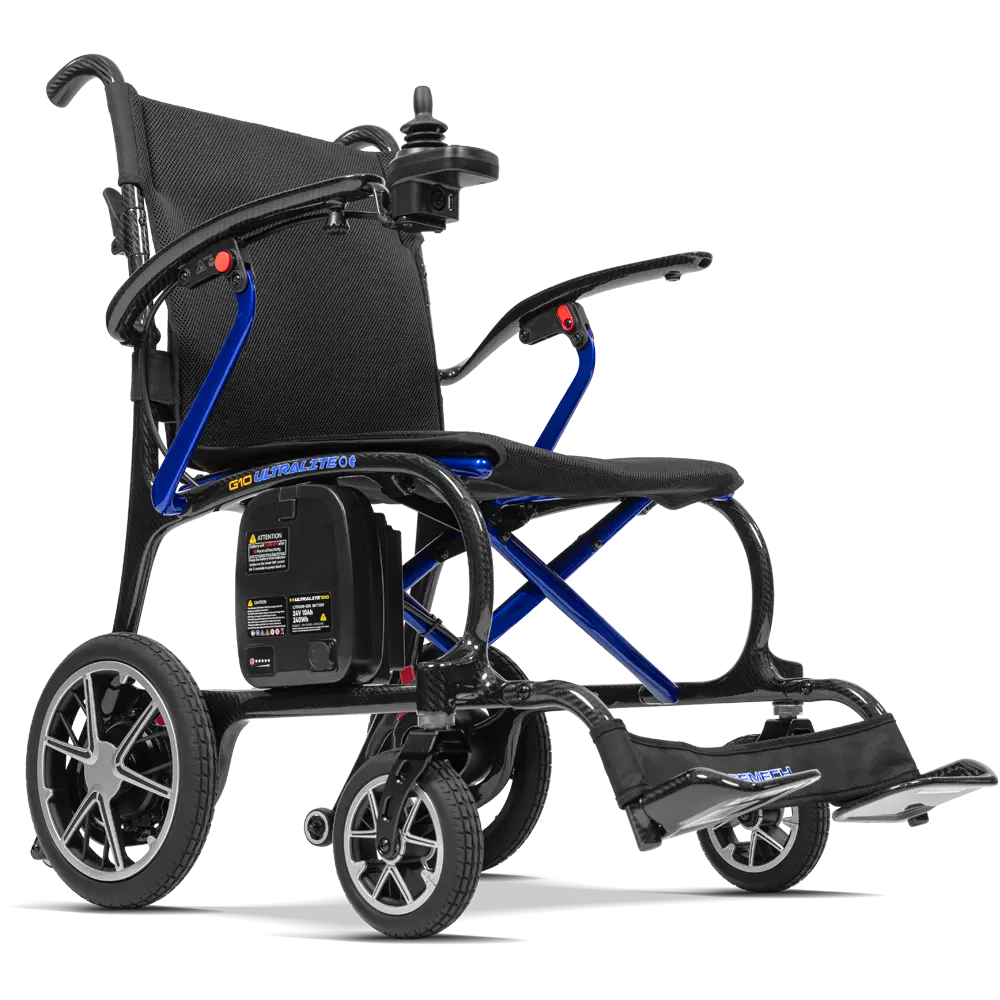
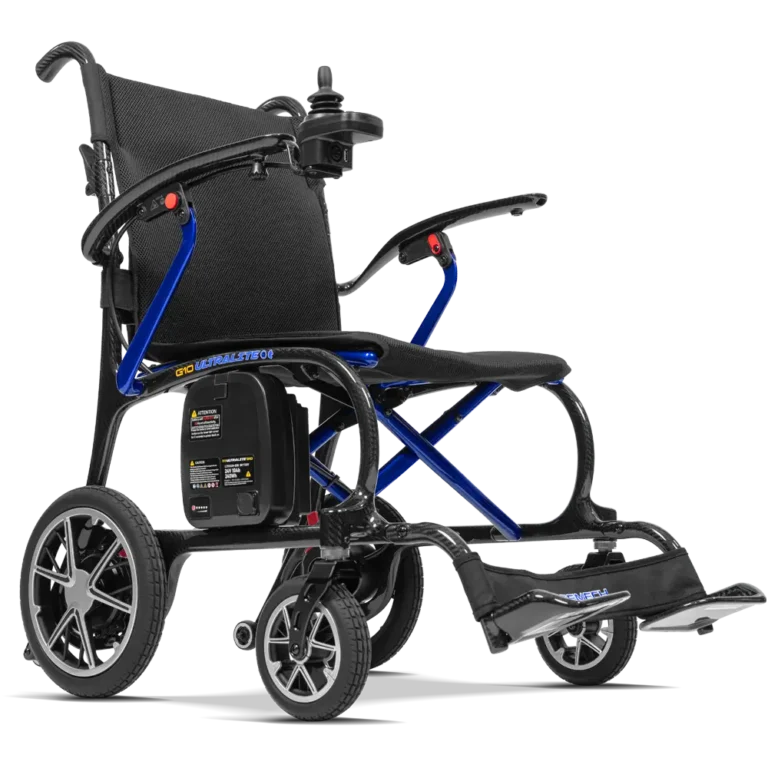 Forcemech Ultralite G10 Lightweight Folding Electric Wheelchair
- Battery (chemistry)24V/10Ah lithium (240 Wh)
- Total Weight (Without Battery)25.8 lbs
- Battery Weight2 lbs
$2,999View details 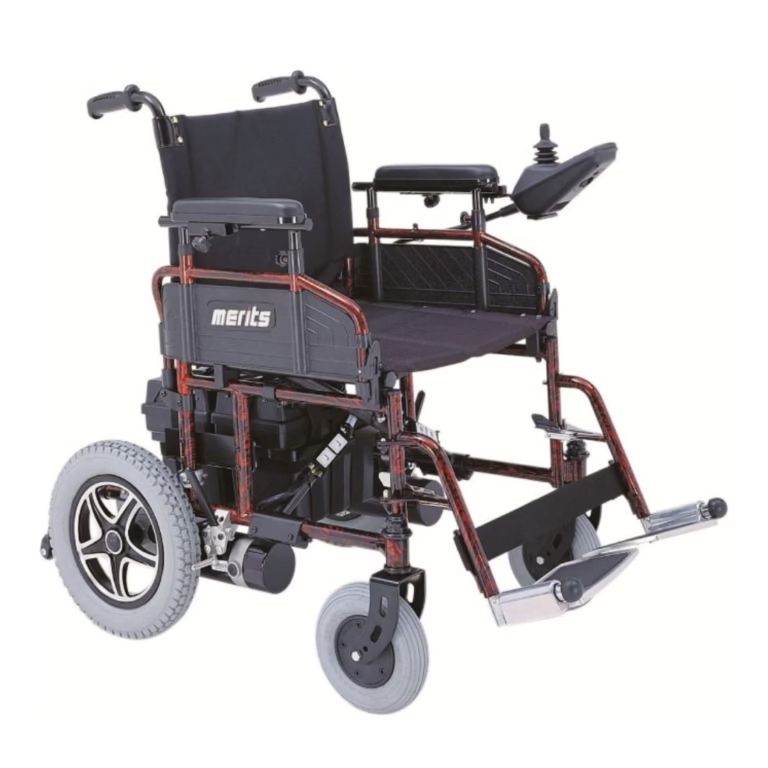 Merits P101 Travel Ease Folding Power Wheelchair
- Battery (chemistry)33Ah U1 AGM lead-acid, 2 required (396 Wh each)
- Total Weight150 lbs
- Wt of Heaviest Pc.86 lbs
$1,811View details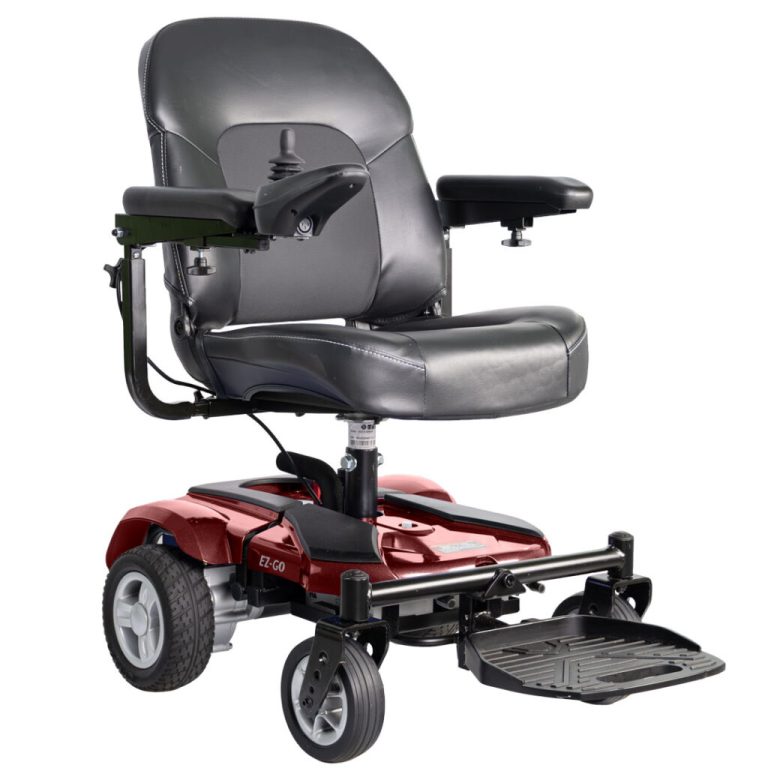 Merits EZ-GO Deluxe Travel Power Wheelchair – P321B
- Battery (chemistry)12V/22Ah SLA lead-acid, 2 pcs (264 Wh each)
- Total Weight113 lbs
- Heaviest Piece54 lbs
$1,978View details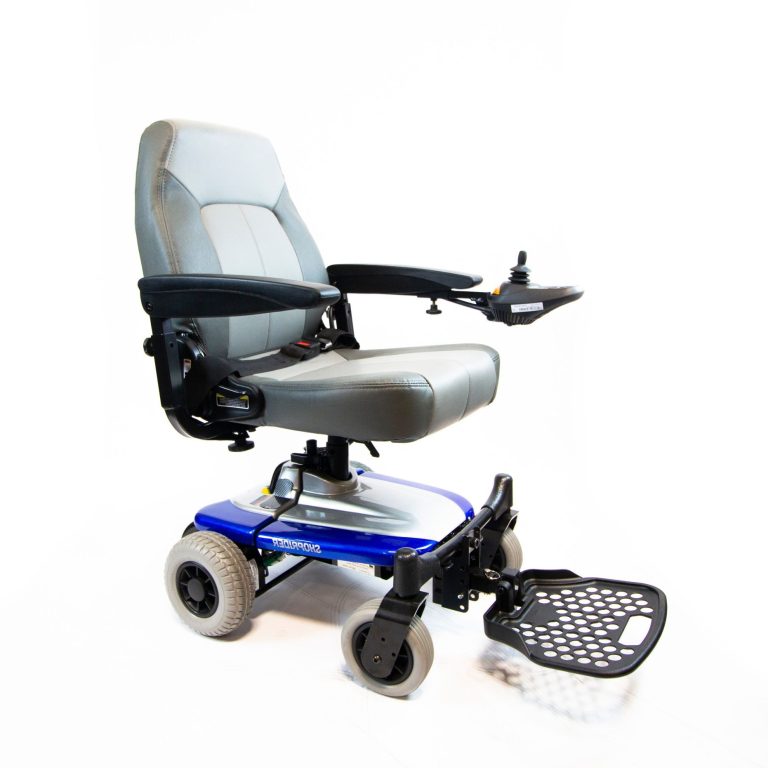 Shoprider Smartie Portable Powerchair – UL8W
- Battery (chemistry)12V 12Ah lithium pack (144 Wh)
- Product Weight93 lbs
- Weight of Heaviest Part29 lbs
$3,069View details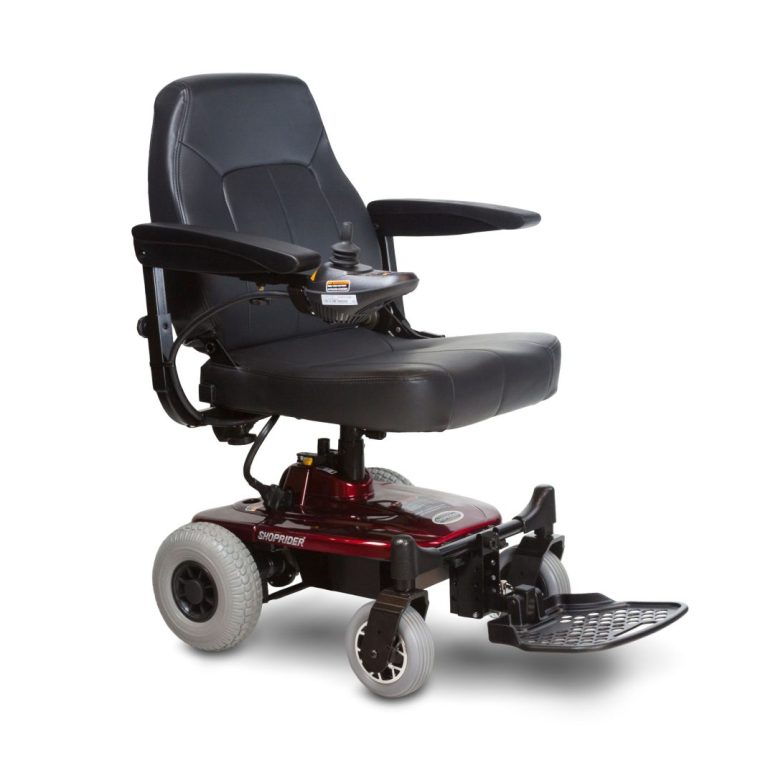 Shoprider Jimmie Portable Power Chair – UL8WPBS
- Battery (chemistry)12V 12Ah lead-acid, 2 (144 Wh each)
- Product Weight106 lbs
- Weight of Heaviest Part40.5 lbs (Front Assy)
$2,119View details
Can you take an electric wheelchair on a plane?
Yes. US airlines must accept your electric wheelchair as a mobility device, check it at the gate at no extra charge, and return it to you at the aircraft door. It does not count against your baggage allowance.
That right comes from the Air Carrier Access Act, the federal disability-access rule the Department of Transportation enforces. Under the ACAA a power wheelchair is a mobility aid, not luggage. The airline cannot bill you for it, cannot count it toward your bag limit, and cannot make you check it at the ticket counter if you would rather keep it to the jet bridge. If a gate agent tells you otherwise, they are wrong, and the DOT disability hotline exists for exactly that moment. The same rule puts real duties on the airline. It has to stow and return the chair as priority baggage at no charge, help you take it apart and put it back together if you ask, and it cannot turn the chair away on size or weight alone as long as it fits the cargo hold.
Whether a specific chair clears comes down to one thing, and it is not the chair. It is the battery. Spillproof lead-acid and AGM batteries ride installed on the chair with no watt-hour cap. Lithium batteries follow stricter limits and often have to come off and travel in the cabin. So everything turns on two facts about your chair. The first is the battery chemistry printed on the label. The second, if it is lithium, is the watt-hour total. Once you know those two, the gate conversation is a short one.
The rest is the watt-hour formula, the limits the five largest US carriers publish, the gate-check steps in order, and the specific in-stock chairs whose batteries meet the rule.
The battery rule that decides everything - lithium watt-hours vs spillproof lead-acid
Airlines sort wheelchair batteries into two buckets. Spillproof lead-acid and AGM batteries ride installed on the chair with no watt-hour limit. Lithium batteries follow the IATA limits of 300 watt-hours installed and 160 watt-hours per spare, and most spares have to be removed and carried in the cabin.
Read the chemistry off the battery label first, because it puts you on one of two completely different paths.
Spillproof lead-acid, AGM and gel. These are sealed dry-cell batteries that cannot leak acid even if the case cracks, which is why airlines let them stay bolted to the chair and travel in the hold. Ground crew secure the battery, the chair goes down with it installed, and no watt-hour cap applies. That is why a heavier lead-acid travel chair can still fly with almost no paperwork. The tradeoff is weight, since lead-acid gives you fewer miles per pound than lithium. There is no size limit on a spillproof battery either, so even a large bariatric chair like the Merits Atlantis clears the battery rule on chemistry alone. With a chair like that the only open question is bulk, whether the frame breaks down enough for the cargo hold, never the battery.
Lithium-ion. Lithium gets the strict treatment because of the fire risk a damaged cell carries. Per FAA PackSafe and the IATA dangerous-goods rules, a lithium battery installed on the chair is capped at 300 watt-hours, and a spare battery is capped at 160 watt-hours with most carriers allowing no more than two of those. There is one extra allowance for mobility aids that matters for travel chairs. With the airline's advance approval a passenger may instead carry a single larger spare of up to 300 watt-hours in place of the two 160 watt-hour spares. Most spare lithium packs must come off the chair and ride in the cabin with the terminals taped or otherwise protected from a short circuit. A spare in the 100 to 160 watt-hour range needs the airline's sign-off in advance.
One nuance is worth knowing. Those watt-hour caps apply to lithium batteries you can take off the chair, the spares and any pack a passenger removes by hand. A lithium battery sealed into the chair and not removable by the passenger is handled differently under the federal rule and carries no watt-hour limit at all, the same as a lead-acid pack. Most travel power chairs use a battery you lift out, which is why the 300 and 160 watt-hour figures are the ones you deal with in practice. If your chair's pack is built in and not user-removable, say so when you call, and the airline treats it as an installed battery rather than a capped spare.
Raphael's rule of thumb Before I book a flight for a customer, I do one piece of arithmetic at the kitchen table. Volts times amp-hours. If a single lithium pack lands under 160 watt-hours, I know it can travel as a carry-on spare with airline approval and I stop worrying. If it is between 160 and 300, it is fine installed, and with the airline's advance sign-off it can ride as the one larger spare they allow up to 300 watt-hours. Anything over 300 and I steer the customer to a lead-acid model instead, because that battery rides installed with no cap and the gate conversation is over in thirty seconds.
One caveat is worth stating plainly. A spare above 160 watt-hours will be refused or need special approval, and an installed pack above 300 watt-hours can be turned away. Read the watt-hour figure off your own pack before you book a flight, not the morning you fly.
- Lead-acid, AGM or gel (spillproof)No watt-hour cap rides installedBattery stays on the chair, airline staff secure it, no Wh limit applies
- Lithium installed on the chair300 Wh max installedA 24V 10Ah pack is 240Wh, under the limit
- Lithium spare in the cabin160 Wh max per spareComes off the chair, carried on board, terminals taped, 100 to 160Wh needs airline approval
How to calculate your wheelchair battery watt-hours
Multiply the battery's voltage by its amp-hour rating. That number is the watt-hours, and it is the figure the airline cares about.
The formula is one line. Watt-hours equal volts times amp-hours. A 24V 10Ah pack is 240 watt-hours. A 12V 12Ah pack is 144 watt-hours. Both sit under the 300 watt-hour installed limit, and the 144 watt-hour pack also clears the 160 watt-hour spare limit outright.
You will find the two numbers you need printed on the battery case and on the chair's spec sheet, usually written like 24V/10Ah or 12V 22Ah. Apply it to the lithium chairs here and the picture is clean. The Forcemech Ultralite G10 runs a single 24V 10Ah pack, so 24 times 10 is 240 watt-hours. The Shoprider Smartie runs a 12V 12Ah pack, so 12 times 12 is 144 watt-hours. Both clear the installed limit with room to spare.
For a lead-acid chair you can still run the math, but the number is informational only because no watt-hour cap applies to spillproof batteries. We show it in the table below so you can compare apples to apples, not because the airline will ask.
Airline electric wheelchair battery policies compared
Every major US airline runs on the same federal floor. Lithium up to 300 watt-hours installed and one or two spares up to 160 watt-hours each carried in the cabin, lead-acid installed. What changes carrier to carrier is the notice window they ask for, how many spares they allow, and which assistance desk you call.
The table below is sourced general guidance as of June 2026 for the five largest US carriers. The federal rules come from the DOT and IATA framework, and the spare-battery counts and notice windows reflect each airline's published accessibility guidance. Airline policy changes, so check the details with your carrier when you book and reference the ACAA if a gate agent pushes back.
Airline-friendly electric wheelchair comparison - battery chemistry, watt-hours and pack-down (exact manufacturer specs)
| Chair | Battery (chemistry and watt-hours) | Weight (frame or total) | Heaviest piece | Folded or take-apart | Range per charge | Weight capacity |
|---|---|---|---|---|---|---|
| Forcemech Ultralite G10 | 24V/10Ah lithium (240 Wh) | 25.8 lbs (without battery) | Folds whole | Folds to 29" x 12" x 28" | 10 miles | 265 lbs |
| Merits P101 Travel Ease | 33Ah U1 AGM lead-acid, 2 required (396 Wh each) | 150 lbs | 86 lbs | Folds like a manual chair | up to 18 miles | 300 lbs |
| Merits EZ-GO Deluxe P321B | 12V/22Ah SLA lead-acid, 2 pcs (264 Wh each) | 113 lbs | 54 lbs | Three-piece take-apart | Up to 12 Miles | 300 lbs |
| Shoprider Smartie UL8W | 12V 12Ah lithium pack (144 Wh) | 93 lbs | 29 lbs | One-touch take-apart | 10 miles | 250 lbs |
| Shoprider Jimmie UL8WPBS | 12V 12Ah lead-acid, 2 (144 Wh each) | 106 lbs | 40.5 lbs (Front Assy) | Three-piece take-apart | 10 miles | 250 lbs |
The "call ahead" window in the table is the airline's request, not a legal requirement. You can show up without calling, but a 48-hour heads-up means a trained assistance agent is expecting you and your battery, which is the difference between a smooth gate-check and a twenty-minute debate. If a gate agent misapplies the rule, the backstop is the DOT Aviation Consumer Protection line, and airlines must make an ACAA-trained Complaints Resolution Official available on request, in person or by phone.
How to gate-check a power wheelchair step by step
Gate-checking means you keep the chair all the way to the aircraft door, hand it off there, and get it back at the door on arrival rather than at baggage claim. Here is the sequence in the order you will run it.
Step one, before you book. Call the airline's disability or special-assistance desk. Give them the battery chemistry and the watt-hour figure you calculated, and request a gate-check with gate-return. This is also when you flag a lithium spare so they can pre-approve it. Doing this 48 hours out means the gate crew is not learning about your chair for the first time at boarding.
Step two, packing the battery. If your chair runs spillproof lead-acid or AGM, the battery stays installed and you do nothing. If it runs lithium and you are bringing a spare, the spare comes off the chair and rides in the cabin with you. Tape the terminals or keep the pack in its original case so nothing can short against keys or coins. A lithium spare is never allowed in checked or hold baggage.
Step three, at the airport. Arrive about an hour earlier than you normally would. Get the chair gate-tagged at the counter or the gate, and walk the agent around it to note any pre-existing scuffs or damage before it goes down. A quick photo on your phone protects you if something comes back broken.
Step four, at the gate and jet bridge. Ride the chair down the bridge to the aircraft door. If the crew asks, set the joystick or drive system to free-wheel or manual mode so they can push it into the hold without fighting the motor brake. Hand it off at the door.
Step five, on arrival. The chair is supposed to come back to you at the aircraft door, not the carousel. Confirm that with the crew before you board so it is on their radar. Inspect it on the bridge before you leave, and if anything is damaged, report it on the spot. The DOT requires airlines to handle wheelchair damage claims under the ACAA, and a report filed before you leave the airport is far stronger than one filed from home.
These steps are general best practice drawn from FAA, TSA and DOT guidance. Airports and aircraft sizes vary, and a regional jet with a small cargo door may handle your chair differently than a wide-body. When in doubt, the assistance desk you called in step one is the authority.
- 1. Call 48 hours ahead48 hours beforeTell the assistance desk the battery chemistry and watt-hours, request gate-check with gate-return
- 2. Prep the battery160 Wh spare capLead-acid stays installed, a lithium spare comes off and rides in the cabin with terminals taped
- 3. Arrive early1 hour earlierGet the chair gate-tagged and note any pre-existing damage with the agent
- 4. Ride to the aircraft doorJet bridge hand-off pointSet the joystick to free-wheel if asked, staff stow it in the hold
- 5. Get it back at the doorAircraft door on arrivalInspect before leaving the bridge, use the DOT damage-report path if needed
Best airline-friendly electric wheelchairs compared
These five in-stock travel chairs cover the airline case from both directions. One is a single sub-300Wh lithium folder, the cleanest possible lithium path. The other four are lead-acid take-aparts whose spillproof batteries ride installed with no watt-hour cap, plus one lithium take-apart that comes in well under both limits.
Every cell in the table is the exact manufacturer spec from the chair's own sheet. Watt-hours are computed as volts times amp-hours per single battery, so you can read across to your own airline path. Two shapes win at the gate. A lithium folder under 300 watt-hours installed, or a lead-acid take-apart whose batteries are uncapped because they are spillproof. The lead-acid chairs skip the lithium spare paperwork entirely, because the batteries never come off.
Airline-friendly electric wheelchair comparison - battery chemistry, watt-hours and pack-down (exact manufacturer specs)
| Chair | Battery (chemistry and watt-hours) | Weight (frame or total) | Heaviest piece | Folded or take-apart | Range per charge | Weight capacity |
|---|---|---|---|---|---|---|
| Forcemech Ultralite G10 | 24V/10Ah lithium (240 Wh) | 25.8 lbs (without battery) | Folds whole | Folds to 29" x 12" x 28" | 10 miles | 265 lbs |
| Merits P101 Travel Ease | 33Ah U1 AGM lead-acid, 2 required (396 Wh each) | 150 lbs | 86 lbs | Folds like a manual chair | up to 18 miles | 300 lbs |
| Merits EZ-GO Deluxe P321B | 12V/22Ah SLA lead-acid, 2 pcs (264 Wh each) | 113 lbs | 54 lbs | Three-piece take-apart | Up to 12 Miles | 300 lbs |
| Shoprider Smartie UL8W | 12V 12Ah lithium pack (144 Wh) | 93 lbs | 29 lbs | One-touch take-apart | 10 miles | 250 lbs |
| Shoprider Jimmie UL8WPBS | 12V 12Ah lead-acid, 2 (144 Wh each) | 106 lbs | 40.5 lbs (Front Assy) | Three-piece take-apart | 10 miles | 250 lbs |
Each chair breaks down to its own specific airline use case. The Forcemech G10 leads as the cleanest lithium case at a single 240 watt-hour pack on a 25.8 lb frame. You can also browse folding electric wheelchairs that pack down for a trunk or overhead bin or shop our in-stock portable and travel electric wheelchairs for more options in the same weight class.
Airline-friendly electric wheelchairs we recommend
- #1Best overall
Forcemech Ultralite G10 Lightweight Folding Electric Wheelchair
The cleanest airline case in the guide. A single 24V 10Ah lithium pack is 240 watt-hours, under the 300Wh installed limit, so the chair can travel whole with the battery in. At 240 watt-hours the 2 lb pack can also ride as the one airline-approved spare allowed up to 300 watt-hours, with advance sign-off rather than automatically. The 25.8 lb frame folds to 29 by 12 by 28 inches, so a solo traveler can lift it into a trunk or hand it off at the jet bridge without help.
See price & details- Pros
- Single 240Wh lithium pack sits under the 300Wh installed rule, and the 2 lb spare can be carried on with airline approval
- 25.8 lb frame (without battery) folds to 29 by 12 by 28 inches for a gate-check or most car trunks
- In stock with 10 miles of range per charge and lithium's light weight per mile
- Cons
- 265 lb weight capacity rules it out for heavier riders, who should look at the lead-acid Merits chairs
- Carry-on lithium spare still needs the airline's advance approval, it is not automatic
- #2
Merits P101 Travel Ease Folding Power Wheelchair
The heavy-duty airline folder. It collapses like a manual wheelchair, and its two 33Ah U1 AGM lead-acid packs (396 watt-hours each) ride installed with no watt-hour cap, so there is no lithium spare to remove or pre-approve. A foldable battery bracket lets a gate agent free the chair fast. Best when the rider needs 300 lb capacity and an 18 to 20 inch seat with up to 18 miles of range.
See price & details- Pros
- Spillproof AGM batteries ride installed with no watt-hour cap, skipping the lithium spare paperwork
- Folds like a manual chair and carries up to 300 lbs at an 18 to 20 inch seat
- Up to 18 miles per charge, the longest range of the take-apart bench here
- Cons
- 150 lb total weight with an 86 lb heaviest piece, so you will want help lifting it
- Lead-acid is heavier per mile than lithium
- #3
Merits EZ-GO Deluxe Travel Power Wheelchair - P321B
The value airline-ready pick. It breaks into three pieces with a 54 lb heaviest part for the trunk or the gate, and its two 12V 22Ah sealed lead-acid batteries (264 watt-hours each) ride installed with no lithium-spare paperwork. A 23 inch turning radius handles tight cabins and concourses. The cheapest chair here that still clears the gate cleanly, with up to 12 miles per charge and 300 lb capacity.
See price & details- Pros
- SLA lead-acid rides installed and is not watt-hour-capped, same simple airline case as the P101
- Three-piece take-apart drops the heaviest lift to 54 lbs
- 300 lb capacity and a 23 inch turning radius at the lowest price in the lead-acid trio
- Cons
- Up to 12 miles of range is the shortest of the recommended chairs
- Three pieces to assemble and break down each trip
- #4
Shoprider Smartie Portable Powerchair - UL8W
The lightest take-apart in the guide at 93 lbs with a 29 lb heaviest piece, the lightest single lift here. Its 12V 12Ah lithium pack is only 144 watt-hours, comfortably under both the 300Wh installed and 160Wh spare limits, so if the airline asks you to remove it, it rides in the cabin as a spare with their advance approval. One-touch disassembly drops it into three pieces, and a 15.5 inch turning radius handles tight spaces.
See price & details- Pros
- 144Wh lithium pack clears both the installed and spare limits, with advance airline approval for the carry-on spare
- Lightest take-apart at 93 lbs with a 29 lb heaviest piece
- One-touch disassembly and a 15.5 inch turning radius for tight cabins
- Cons
- One-touch take-apart still means three pieces to load each trip
- 250 lb capacity and a 10 mile range suit travel rather than heavy-duty daily use
- #5
Shoprider Jimmie Portable Power Chair - UL8WPBS
Splits into three parts with a 40.5 lb heaviest piece (the front assembly) and is marketed by Shoprider as airline-approved. Two 12V 12Ah lead-acid batteries at 144 watt-hours each ride installed with no watt-hour cap, so the airline-approved label tracks with how the chair actually travels. About 10 miles of range and 250 lb capacity. Airline-approved is the manufacturer's label, so still check with your carrier.
See price & details- Pros
- Lead-acid batteries ride installed with no watt-hour cap, no lithium spare to clear
- Three-part disassembly with a 40.5 lb heaviest piece, lightest heaviest-piece of the lead-acid chairs
- Manufacturer markets explicit airline-approved disassembly
- Cons
- Airline-approved is the maker's label rather than a federal rating
- 250 lb capacity and a 10 mile range, in line with its travel-folder class
Top airline pick - Forcemech Ultralite G10 folding electric wheelchair
If you want one chair built to fly, the Forcemech Ultralite G10 is it. Its single 24V 10Ah lithium pack is 240 watt-hours, under the 300Wh installed limit, on a 25.8 lb frame (without the 2 lb battery) that folds to 29 by 12 by 28 inches for a gate-check or a car trunk. It is in stock at $2,999.
Why the battery clears so easily comes down to the math. A single 240 watt-hour pack sits comfortably under the 300 watt-hour installed rule, so the chair can travel in the hold whole with the battery installed. At 240 watt-hours it can also ride as the one airline-approved spare allowed up to 300 watt-hours, so with advance sign-off you can pull the 2 lb pack and carry it in the cabin. That sign-off is required and not automatic, but either path works, which is rare.
The portability case is the other half of why it wins. The frame is 25.8 lbs before you add the 2 lb battery, it folds to 29 by 12 by 28 inches, gives about 10 miles per charge, and carries up to 265 lbs. That is a chair a solo traveler can lift into a trunk or hand off at the jet bridge without help.
The scope still applies. Acceptance rests with the carrier, and the carry-on spare path needs the airline's sign-off rather than being a guarantee. The 265 lb capacity also rules it out for heavier riders, who should look at the lead-acid Merits options below. For most travelers wanting the simplest battery conversation, this is the chair. When you are ready, browse folding electric wheelchairs that pack down for a trunk or overhead bin to see it alongside its siblings.
Lead-acid travel folders that ride with the battery installed
If you would rather skip the lithium-spare paperwork altogether, three take-apart and folding chairs run spillproof lead-acid or AGM batteries that stay installed with no watt-hour cap. The Merits P101, the Merits EZ-GO Deluxe, and the Shoprider Jimmie all let the battery travel bolted to the chair.
The appeal is simplicity. Spillproof lead-acid and AGM batteries are not watt-hour-capped, so there is no carry-on spare to remove, tape, and get pre-approved. You hand the whole chair off at the gate and the battery goes with it. The cost is weight, and the number that matters is not total weight but the heaviest single piece, because that is what you or a gate agent actually lifts.
Merits P101 Travel Ease - folds like a manual chair at 300 lb capacity
The Merits P101 is the heavy-duty airline folder. It collapses like a manual wheelchair, its two 33Ah U1 AGM lead-acid packs (396 watt-hours each, installed and uncapped) lift out on a foldable bracket, and it carries up to 300 lbs at an 18 to 20 inch seat. In stock at $1,811.
The AGM chemistry is the whole point here. Those batteries are spillproof dry-cell, so they ride installed with no watt-hour limit and you skip the lithium conversation. The manual-style fold makes it compact for the hold, and the foldable battery bracket means a gate agent can free the chair quickly. The catch is heft. Total weight is 150 lbs and the heaviest piece is 86 lbs, so you will want help lifting it. For a rider who needs width and up to 18 miles of range, that is a fair trade.
Merits EZ-GO Deluxe P321B - the lowest-cost three-piece airline folder
The Merits EZ-GO Deluxe is the value airline-ready pick. It breaks into three pieces with a 54 lb heaviest part for the trunk or the gate, runs two 12V 22Ah sealed lead-acid batteries (264 watt-hours each, installed, no lithium paperwork), and carries up to 300 lbs. In stock at $1,978.
The SLA lead-acid chemistry rides installed and is not watt-hour-capped, same as the P101, so the airline case is just as simple at a lower price. The three-piece take-apart drops the heaviest lift to 54 lbs, which is far more manageable than the P101's 86 lbs. You get a 23 inch turning radius for tight cabins and concourses and up to 12 miles per charge. For a flyer who wants the cheapest chair that still clears the gate cleanly, this is the one.
Shoprider Jimmie - manufacturer-marketed airline-approved take-apart
The Shoprider Jimmie splits into three parts with a 40.5 lb heaviest piece (the front assembly) and is marketed by Shoprider as airline-approved. It runs two 12V 12Ah lead-acid batteries at 144 watt-hours each, installed and uncapped, and carries up to 250 lbs. In stock at $2,119.
The lead-acid chemistry means the batteries ride installed with no watt-hour cap, so the airline-approved label tracks with how the chair actually travels. The three-part disassembly brings the heaviest lift down to 40.5 lbs, the lightest heaviest-piece among the lead-acid chairs here. It gives about 10 miles of range. Airline-approved here is the manufacturer's label, not a federal certification, so you still check with your carrier the same way you would for any chair.
Shoprider Smartie - lightest lithium take-apart at 144 watt-hours
The Shoprider Smartie is the lightest take-apart in the guide at 93 lbs with a 29 lb heaviest piece, and its 12V 12Ah lithium pack is only 144 watt-hours, comfortably under both the 300 watt-hour installed and 160 watt-hour spare limits. In stock at $3,069.
This is the chair for a traveler who wants lithium's light weight and a pack that sits well under the cap. At 144 watt-hours it is inside the 100 to 160 watt-hour spare band, so it clears the limit and will not be refused, but if the airline asks you to remove it the spare still needs their advance approval before it rides in the cabin. One-touch disassembly drops it into three pieces with a 29 lb heaviest part, the lightest single lift in this whole guide. You get up to 250 lbs of capacity, about 10 miles per charge, and a 15.5 inch turning radius for tight spaces. The tradeoff against the lead-acid trio is price, but you pay it for the lightest lift in the guide and a lithium pack that comes in well under both limits.
Why airplane-friendly on a product page is not the same as gate-checkable
An "airplane-friendly" line on a product page is a marketing claim, not a guarantee the chair gate-checks. Always read the actual spec sheet for weight and battery before you book. The Shoprider 6Runner 14 is the cautionary example.
The 6Runner 14's own marketing calls it airplane-friendly. Look at the spec sheet and the label falls apart for travel. It weighs 277 lbs, runs dual 12V 50Ah lead-acid batteries, and carries up to 450 lbs. That is a full-size road chair built for 21-plus miles of daily range, not a piece you take apart and hand off at a jet bridge. The batteries are spillproof so they would technically ride installed, but the chair does not pack down to fly.
So before you trust any airplane-friendly label, verify three things. The total weight and the heaviest single piece a person can actually lift. The battery chemistry and the per-battery watt-hours. And whether the chair folds or takes apart at all, because some that wear the label do neither. Run those checks against the spec sheet, the same way we did for every chair in the table above.
And remember the standing caveat. Even a chair whose specs verify as flight-friendly is sourced general guidance, not a guarantee. The carrier makes the final call at the gate. For more on pairing battery watt-hours to real-world miles, see how far an electric wheelchair goes on one charge and how to care for the battery, and for the airline-friendliest frames by weight, see the lightest folding electric wheelchairs ranked by frame weight or see the lightest electric wheelchairs by frame weight in our collection.
Flying with a mobility scooter follows the same battery math
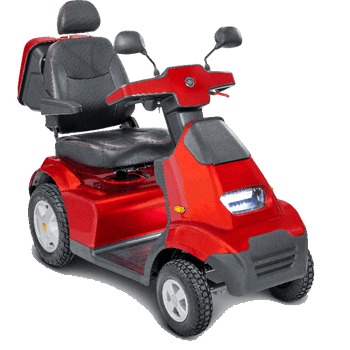
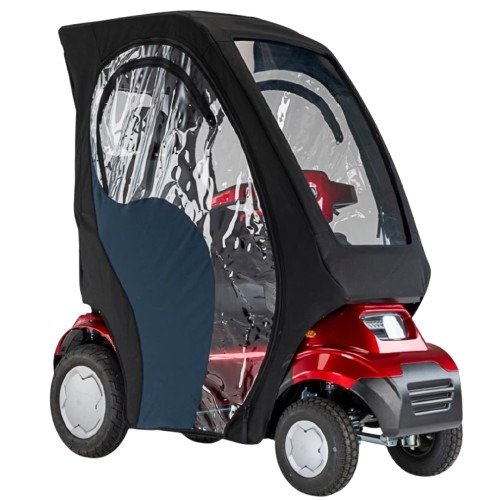
If you travel on a mobility scooter rather than a power chair, the federal battery rules read the same way. The chemistry on the label sets the path. A spillproof lead-acid or AGM scooter battery rides installed in the hold with no watt-hour cap, and a lithium scooter pack follows the same 300 watt-hour installed and 160 watt-hour removable-spare limits a wheelchair pack does. The one practical difference is bulk, since a full-size four-wheel scooter is harder to break down for a cargo hold than a folding travel chair. For the off-pavement and travel side of the scooter catalog, see our guide to all-terrain mobility scooters.
Short answers to the questions travelers ask most about FAA battery rules, gate-checking, and which power chairs make it onto a plane. Each one is sourced general guidance, so confirm the details with your specific carrier.
Frequently asked questions
Can you take an electric wheelchair on a plane?
Yes. US airlines must accept an electric wheelchair as a mobility device, check it at the gate at no extra charge, and return it at the aircraft door. It does not count against your baggage allowance. That right comes from the Air Carrier Access Act, which the Department of Transportation enforces. Whether a specific chair clears depends on its battery, spillproof lead-acid and AGM ride installed with no watt-hour cap, while lithium follows the 300 watt-hour installed and 160 watt-hour spare limits. This is general guidance, so check the specifics with your carrier.
What is the FAA 300Wh wheelchair battery rule?
Per FAA PackSafe and IATA dangerous-goods guidance, a lithium battery installed on a wheelchair is capped at 300 watt-hours, and each spare lithium battery is capped at 160 watt-hours. Watt-hours equal volts times amp-hours, so a 24V 10Ah pack is 240 watt-hours and clears the installed limit. The cap applies only to lithium. Spillproof lead-acid, AGM and gel batteries have no watt-hour limit because they ride installed and cannot leak. A lithium spare in the 100 to 160 watt-hour range needs the airline's advance approval.
Can you fly with a lithium battery electric wheelchair?
Yes, as long as the pack fits the limits. A lithium battery installed on the chair must be 300 watt-hours or under to ride in the hold. A lithium spare must be 160 watt-hours or under, comes off the chair, and travels in the cabin with the terminals taped against a short circuit. A spare is never allowed in checked or hold baggage. A spare between 100 and 160 watt-hours needs airline approval ahead of time. The Forcemech Ultralite G10's single 240 watt-hour pack clears the installed rule, and the Shoprider Smartie's 144 watt-hour pack clears both limits.
Does an electric wheelchair count as carry-on or checked baggage?
Neither. Under the Air Carrier Access Act a power wheelchair is a mobility aid, not baggage, so it does not count as your carry-on or your checked bag and it does not eat into your allowance. You gate-check the chair, meaning you keep it to the aircraft door, hand it off there, and get it back at the door on arrival rather than at baggage claim. A removable lithium spare is the one piece that rides in the cabin with you, and it does not count against your carry-on limit either.
How do you gate-check a power wheelchair?
Call the airline's disability or special-assistance desk about 48 hours ahead and give them your battery chemistry and watt-hours, then request gate-check with gate-return. Arrive about an hour earlier than usual. Leave a lead-acid battery installed, or remove a lithium spare and carry it in the cabin with the terminals taped. Get the chair gate-tagged and note any pre-existing damage with the agent. Ride to the aircraft door, set the joystick to free-wheel if asked, and hand it off. On arrival, confirm it comes back at the door and inspect it before you leave the jet bridge.
Do airlines charge extra to fly with an electric wheelchair?
No. US carriers cannot charge a fee to transport your electric wheelchair, and it does not count against your baggage allowance. That is a requirement of the Air Carrier Access Act, the federal disability-access rule the Department of Transportation enforces. If a gate agent tries to bill you or count the chair as a checked bag, ask for the Complaints Resolution Official, the ACAA-trained staffer the airline must make available on request, and use the DOT Aviation Consumer Protection line as the backstop.
These battery limits, passenger rights, and gate-check steps are drawn from FAA, TSA, IATA, and DOT guidance, plus the manufacturer spec sheets for every chair cited. For the binding rule on your flight, the call belongs to your airline.
Sources & references
- FAA PackSafe - lithium batteries powering wheelchairs and mobility aids Authority
- TSA - traveling with disabilities and medical conditions (wheelchairs and mobility aids) Authority
- IATA - lithium battery and mobility-aid guidance for passengers (300Wh installed, 160Wh spare) Authority
- US DOT - Air Carrier Access Act, traveling with assistive devices and wheelchairs Authority
- Forcemech - Ultralite G10 specifications (24V/10Ah lithium 240Wh, 25.8 lb frame, folds 29 x 12 x 28 in)
- Merits Health - P101 Travel Ease and EZ-GO Deluxe P321B specifications (AGM and SLA lead-acid, take-apart)
- Shoprider - Smartie UL8W and Jimmie UL8WPBS portable powerchair specifications