

 4.7
4.7
Are Electric Wheelchairs Allowed on the Road in the US? A State by State Guide
Last updated June 2026. This is a general guide for the United States, not legal advice. Local city and county rules can add limits, so check with your own municipality before you ride on any road.
Yes. In most US states an electric wheelchair is allowed to use the road, but the rule is narrower than most people expect. A standard power wheelchair is treated as a pedestrian rather than a vehicle, so it belongs on the sidewalk first and uses the edge of the road only where no usable sidewalk exists. That pedestrian status is also why you do not need a driver license, a registration, or vehicle insurance to use one. The one factor that complicates the answer is speed, and where that line falls depends on how fast a chair travels.
Our picks at a glance
- Top Pick
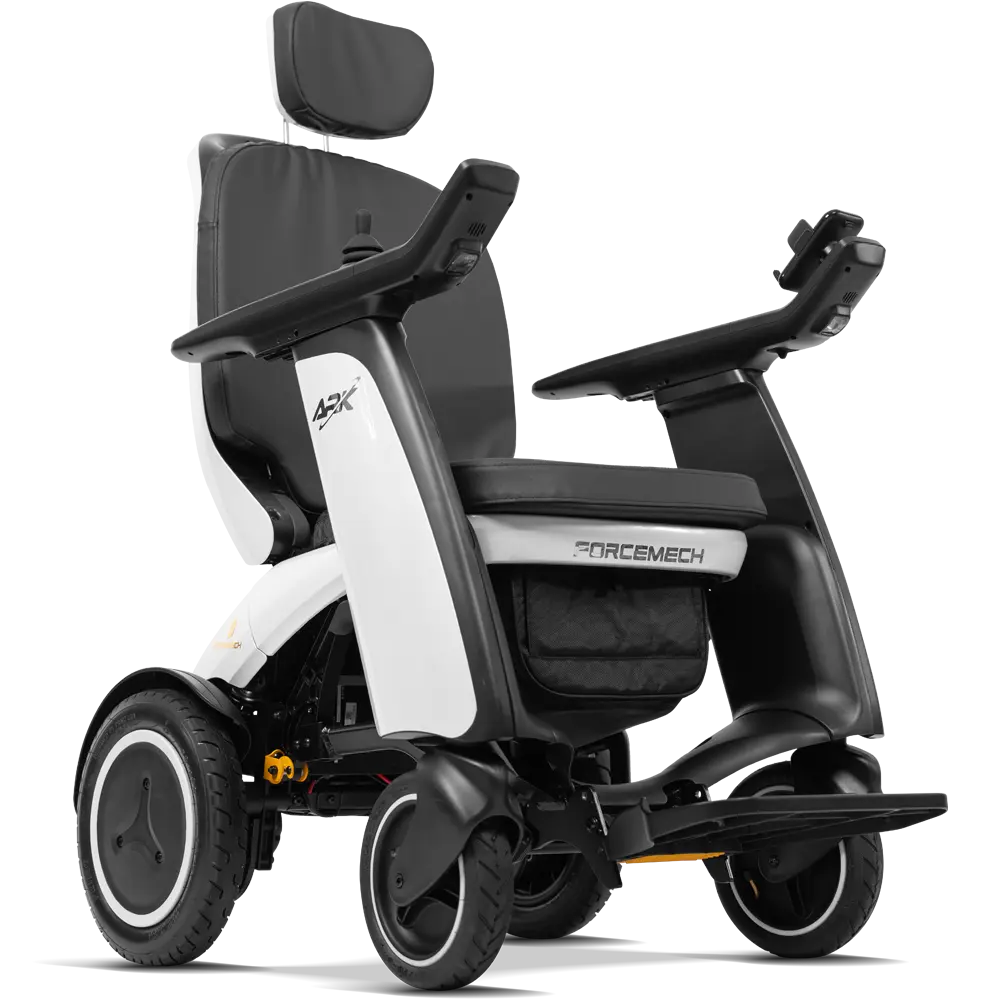
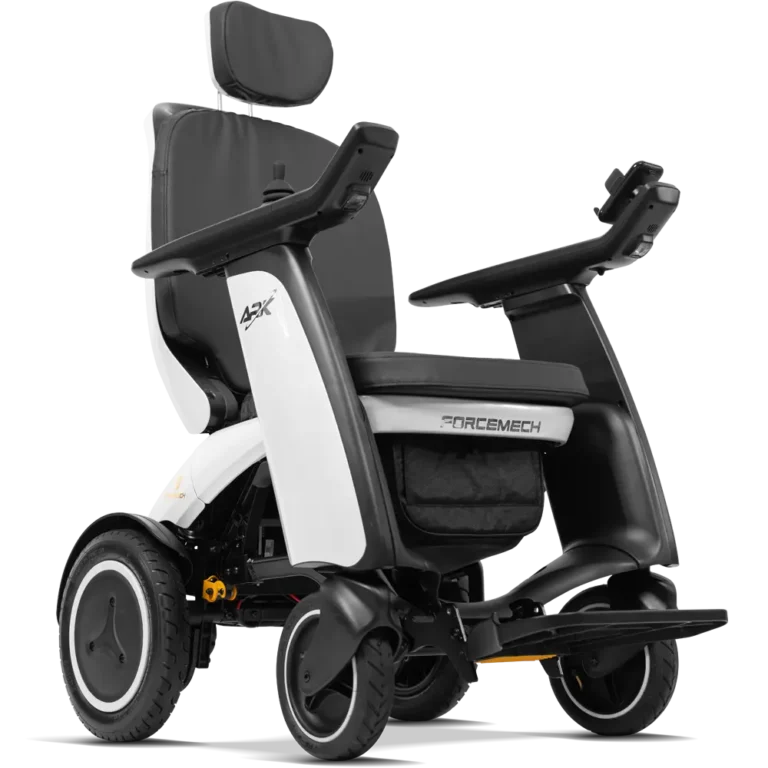 Forcemech ARK Travel-Ready Portable Electric Wheelchair
- Maximum Speed4 mph
- Maximum Travel Range15 Miles
- Maximum Loading Capacity330 lbs
$7,198View details 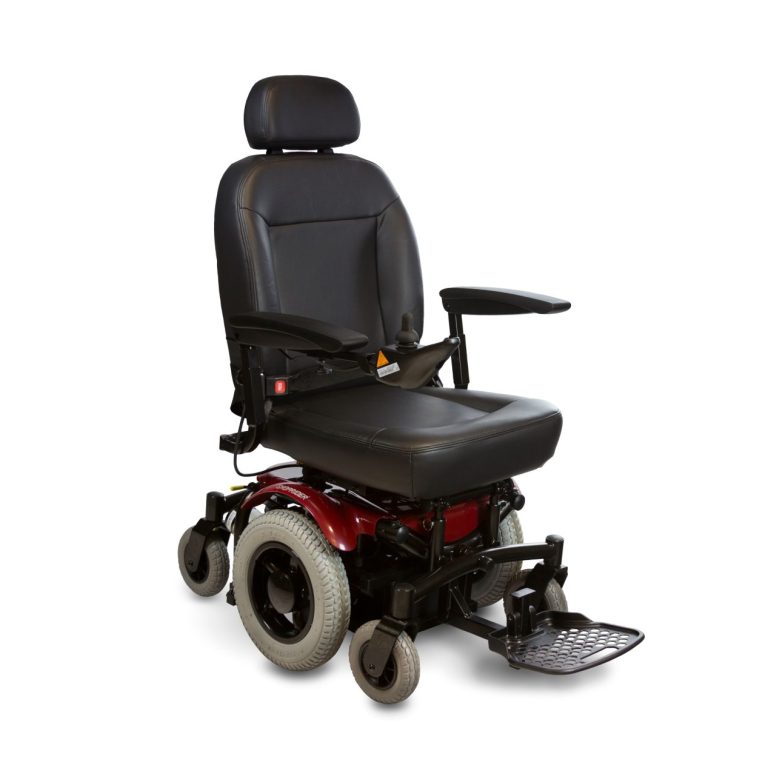 Shoprider 6Runner 14 Heavy Duty Electric Wheelchair – 888WNLLHD
- Maximum Speed5 mph
- Maximum Weight Capacity450 lbs
- Range (Per Charge)21.3 - 23.8 miles
$5,769View details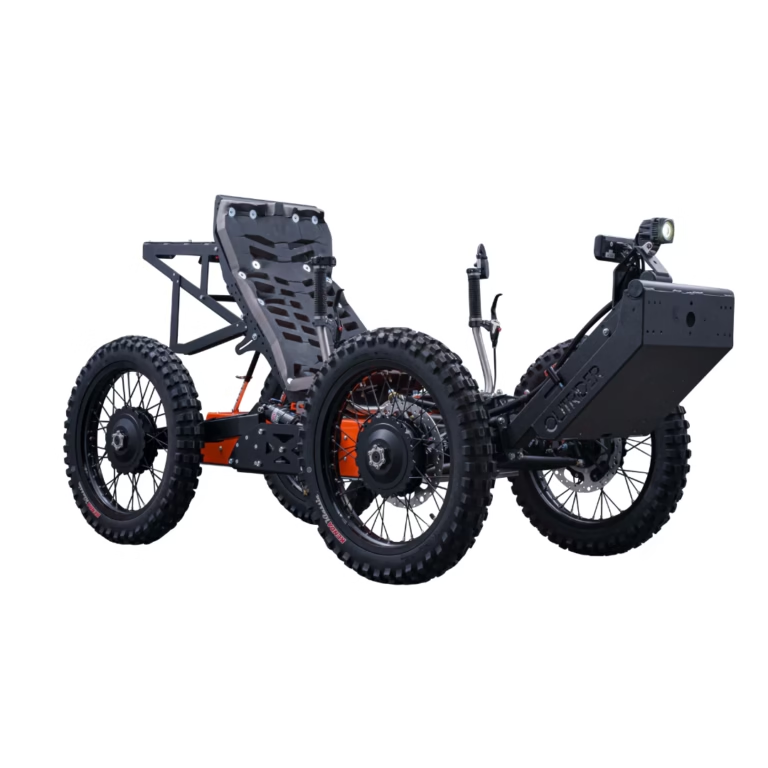 Outrider Coyote 4WD All Terrain 4×4 Wheelchair
- Top Speed17 mph
- Max Range120 miles
- PowertrainQuad-motor 4WD
$22,485View details
Are electric wheelchairs allowed on the road in the US?
In most US states, yes, but as a pedestrian device, not a road vehicle. A standard electric wheelchair rides the sidewalk wherever one exists and may use the road edge facing oncoming traffic only where no usable sidewalk is available. Because it is classed with people on foot, the three things riders worry about most are settled in the states that follow this rule. You do not need a driver license. You do not need to register the chair or hang a plate on it. You do not need vehicle insurance to ride it.
The variable that changes this clean answer is speed. A chair that tops out at 4 to 5 mph behaves like a pedestrian everywhere, since that is roughly walking-to-jogging pace. A fast recreational chair that hits 17 mph starts to interact with road and vehicle law in a way a slow chair never does, which is where the road-edge question gets real. That speed line is where the road rules stop being academic and start to matter.
One caveat up front. The rules here come from the federal Americans with Disabilities Act framework and named state statutes, and this is general information rather than legal advice. State traffic codes differ in their wording, and a city or county can layer on its own ordinance, so the safest move is to check your own state and local rules before you take a chair onto a roadway. The federal floor and the state examples below tell you what to expect, not what your specific town allows.
Are electric wheelchairs considered pedestrians or vehicles?
A standard electric wheelchair used by a person with a disability is legally a pedestrian in nearly every US state, not a motor vehicle. That single classification is what decides everything else. Because the chair sits in the pedestrian category, pedestrian law governs where and how you ride, so you use sidewalks, crosswalks, and pedestrian signals the same way a person walking would.
- Driver licenseNot required for a standard chairLicensing attaches to motor vehicles, not pedestrian-classed mobility devices
- RegistrationNot required for a standard chairNo plate or title for a pedestrian-classed wheelchair
- Vehicle insuranceNot mandatedLiability cover is optional and a personal choice
- Primary travel pathSidewalk first then road edgeRoad edge facing traffic only where no usable sidewalk exists
In practice, pedestrian classification means the rules that govern cars simply do not attach to your chair. A motor vehicle has to be registered with the state, carry insurance, and be operated by a licensed driver on the roadway. A pedestrian-classed mobility chair carries none of that weight. You cross at crosswalks, you obey walk and do-not-walk signals, and you keep to the spaces set aside for people on foot.
There is one place worth being precise about. What the statutes turn on is mobility use by a person with a disability, not the chair's top speed. A disabled rider using a powerchair to get around keeps a strong pedestrian claim whether the chair tops out at 4 mph or 17 mph, because the statute language sets no size or speed limit. Where the picture gets less certain is a very large off-road 4x4 ridden recreationally rather than as a mobility device, since some state codes carve out a separate class for faster or self-balancing personal mobility devices. The next three sections cover the federal ADA backing for pedestrian status, then the no-license and no-registration points, then the sidewalk-first rule and the road-edge exception where speed actually matters.
What federal law says - the ADA and power wheelchairs
Federal law under the Americans with Disabilities Act protects a wheelchair user's access to sidewalks, crosswalks, and public pedestrian areas as a baseline that every state builds on. The ADA does not hand out road permits, but it does establish that a power wheelchair is a legitimate mobility device for a person with a disability, and that public entities and businesses have to accommodate it in pedestrian space.
The ADA defines a wheelchair as a device, manual or power-driven, designed and used by a person with a mobility disability for the main purpose of moving around indoors and outdoors. The US Department of Justice spells this out in its guidance on wheelchairs and other power-driven mobility devices. A device that fits that definition has to be allowed anywhere the public can walk, with very few exceptions, which is the federal anchor for the pedestrian treatment states apply on the traffic side.
The same ADA guidance adds a second category that matters for faster chairs. An Other Power-Driven Mobility Device, or OPDMD, is a device not designed primarily for people with disabilities but used by someone with a mobility disability to get around. Think of a faster or non-traditional ride. A venue may permit an OPDMD with reasonable conditions tied to safety and the type of space. A standard power wheelchair is not an OPDMD, but a 17 mph recreational 4x4 can land in that conversation, which is part of why the speed of your chair shapes the answer.
Here is the practical split. The ADA governs your access to pedestrian space, while where you may ride on an actual road is set by state and local traffic law. The two layers stack rather than compete. Federal law gets you onto the sidewalk and through the crosswalk, and state law tells you what the road edge allows when no sidewalk is there. Read together, they are why the pedestrian-first rule holds across most of the country.
Do you need a license or registration for an electric wheelchair?
No. You do not need a driver license, a vehicle registration, or mandatory vehicle insurance to use a standard electric wheelchair in the states that class it as a pedestrian device, which is nearly all of them. There is no road test, no plate, and no title for a chair that the law treats like a person on foot.
The reason is the same classification point from the section above. Licensing and registration are obligations that attach to motor vehicles, and a pedestrian-classed mobility device is not a motor vehicle. The state has no more reason to license your power chair than it does to license your walking cane. This is the cleanest, most settled part of the whole question for the everyday chairs people actually buy for daily mobility.
The one place the answer gets less clean is a very fast recreational chair operated like a vehicle. At highway-shoulder speeds a device could in theory trip a state's motor-vehicle or low-speed-vehicle definition, even though the daily-mobility chairs almost never do. A statute like California Vehicle Code 467 sets no speed limit on pedestrian status for a disabled rider, so a powerchair used for mobility keeps a strong pedestrian claim, but a 17 mph chair like the Outrider Coyote 4WD ridden on the road sits closer to that line. If you plan to use one that way, your state motor-vehicle agency can tell you where it stands, since the no-license answer is cleanest for sub-6-mph devices and gets murkier as speed climbs.
On insurance, separate the legal question from the practical one. Vehicle insurance is not legally required for a standard chair, but some riders choose to add personal liability coverage anyway, often as a rider on a homeowner or renter policy. That is a personal choice, not a mandate the law puts on you.
Sidewalk first, road edge second - the rule almost every state shares
The rule nearly every US state shares is sidewalk first. Ride the sidewalk wherever one exists, and use the edge of the road, facing oncoming traffic, only where there is no usable sidewalk. The sidewalk is the default and the road edge is the fallback, not the other way around.
The facing-traffic part is the same instinct pedestrian codes give to anyone walking along a road with no sidewalk. You keep to the left edge, facing oncoming traffic, so you can see what is coming and a driver can see you. A wheelchair rider on a shoulderless rural lane follows that same logic. You want eyes on the cars and the cars to have eyes on you, which a sidewalk rider never has to think about but a road-edge rider always should.
Sidewalk etiquette has a legal edge too. Pedestrian rules expect you to travel at a safe speed, yield to people on foot, and use crosswalks and curb cuts at intersections rather than rolling off a curb mid-block. A power chair that can outrun a walker on a crowded sidewalk is exactly the kind of thing a considerate-use rule is written for, so easing off where others are around is both polite and the legal expectation.
Visibility is where this gets concrete. At dawn, dusk, or after dark, lights and reflective gear stop being a nice extra and become a real safety factor for any road-edge rider. A chair with a standard headlight and a brake light is far easier for a driver to register at a crossing or on a poorly lit shoulder. The Forcemech ARK ships with an LED headlight and an automatic rear brake light as standard equipment, which is exactly the visibility kit a sidewalk-and-road-edge rider benefits from rather than an upsell. If you ride trails or rougher ground as well, the same logic carries over to the road and trail capable all terrain electric wheelchairs we stock.
Raphael's rule of thumb If you can hear your own chair's motor over normal street noise, you are going fast enough that you should be on the sidewalk, not the road edge. I tell customers to treat the road shoulder as a last resort for the stretch with no sidewalk, drop to the chair's slow-speed mode there, and get back onto the sidewalk the moment one appears. A fast chair does not make you a vehicle, it just makes you a faster pedestrian who has to be more careful.
The speed question - when does a chair's speed change the rules?
Speed is the single factor that moves a chair out of clean pedestrian territory and into the road-edge gray zone. A 4 to 5 mph chair behaves like a pedestrian everywhere, because that is walking pace. A 17 mph recreational chair is where road-edge rules like Maine's under-35-mph posted-road provision actually come into play, since at that speed the chair interacts with road and vehicle law the way a slow chair never does.
Maine is the clearest state example of this idea. Its code ties pedestrian-style wheelchair use to roads with a low posted speed limit, so a rider on a shoulder is only mixing with traffic that is itself moving slowly. The Maine provision addresses wheelchair use along a public way in the context of roads posted under 35 mph. That is the setting where a faster chair on a road edge gets specifically addressed rather than left to general pedestrian rules. Treat the 35 mph threshold as Maine's approach rather than a national rule, since other states word the road-edge question differently.
The three chairs in the table below anchor the range. The 5 mph Shoprider 6Runner 14 and the 4 mph Forcemech ARK both sit in pedestrian-speed territory, where the road rules barely come up because the chair moves at walking pace. The 17 mph Outrider Coyote 4WD is the one where road-edge speed genuinely matters, and where a rider should treat any road use as a local-law question rather than an assumption.
It helps to be clear about what that fast chair is. The Outrider Coyote is a recreational off-road device built for trails, not a daily sidewalk cruiser. Its own manufacturer FAQ notes that operators have been told it may be ridden on the road or on the sidewalk where situations call for it, which is useful context rather than a legal guarantee for your state. The exact speed, range, lighting, and tire numbers behind these three examples are in the comparison table just below.
Speed, range and road-visibility comparison for three in-stock power wheelchairs (exact manufacturer specs)
| Chair | Top speed | Range per charge | Weight capacity | Tire type | Lights for road visibility | Price |
|---|---|---|---|---|---|---|
| Shoprider 6Runner 14 | 5 mph | 21.3 - 23.8 miles | 450 lbs | 7" front and rear | None standard | $5,769 |
| Forcemech ARK | 4 mph | 15 miles | 330 lbs | Pneumatic tire | LED headlight and automatic rear brake light | $6,999 |
| Outrider Coyote 4WD | 17 mph | 120 miles | 300 lbs | 22" diameter | Lights package included | $22,485 |
State by state electric wheelchair road rules - named statutes
State law sets the road-and-sidewalk detail, and three named examples show the range. The federal ADA sets the floor, but the exact rule for where you may ride is written into each state's pedestrian and traffic code, so the genuinely safe move is to read your own state's wording. The three statutes below show how the same core outcome of pedestrian status arrives through different language and different qualifiers.
- MaineTitle 29-A 2063-A wheelchair along the roadPedestrian-style wheelchair use tied to roads posted under 35 mph
- TexasTransportation Code 541.001 pedestrian definitionPedestrian definition includes a person in a wheelchair
- CaliforniaVehicle Code 467 pedestrian definitionA person using a self-propelled or motorized wheelchair is a pedestrian
Maine. Maine Revised Statutes Title 29-A section 2063-A covers the operation of a wheelchair or similar mobility device along a public way. It frames pedestrian-style wheelchair use in the context of roads posted under 35 mph, which is the road-edge speed line in practice. You can read the provision in the Maine Revised Statutes directly.
Texas. The Texas Transportation Code defines a pedestrian in section 541.001, and that definition includes a person in a wheelchair. A wheelchair user gets pedestrian status directly through that definition rather than through any special device class, which puts a power wheelchair under the same pedestrian and crosswalk rules as a person on foot. The definition is published in the Texas Transportation Code.
California. California Vehicle Code section 467 defines a pedestrian to include a person who is using a self-propelled wheelchair, motorized tricycle, or motorized quadricycle and, because of a physical disability, is otherwise unable to move as a pedestrian. The chair follows pedestrian rules by definition. The full text sits in the California Vehicle Code.
The pattern across all three is the point. Different statute numbers and different wording, sometimes a speed context like Maine's and sometimes a direct pedestrian definition like Texas and California, but the same core result of pedestrian status for a person using a mobility chair. What the three examples cannot do is tell you what your specific city allows, because a municipality can add its own ordinance on top of the state code. Treat the table of statutes as dated and flagged for scheduled re-check, since legislatures amend traffic codes, and the wording current at our last review may shift. Confirm your own state and local rules before you rely on any single line here.
Choosing a road and sidewalk ready power wheelchair
Match the chair to where you actually ride, and prioritize pedestrian-band speed plus good visibility for any road-edge use. The features that matter legally are simple. A speed that keeps you in the pedestrian band, lights so a driver can see you at a crossing or on a shoulder, and tires that handle curb cuts and rough edges without throwing you off line. Three in-stock chairs each illustrate one of those points, so treat them as examples of the legal ideas rather than a ranked buyer's list.
The Forcemech ARK is the lit everyday chair for sidewalk-first riding with the occasional road edge. The Shoprider 6Runner 14 is the pedestrian-classification cruiser that sits squarely in the no-license, sidewalk-first band. The Outrider Coyote 4WD is the high-speed context, the chair where the road-edge exception is real and road use becomes a local-law decision. For everything beyond these three, you can browse the full power wheelchair lineup, and our best all terrain electric wheelchairs ranked by terrain type guide goes deeper on the outdoor and road-capable end.
It all comes down to a single rule. The safest legal posture is a pedestrian-speed chair used sidewalk-first, and a faster chair is a local-law conversation you should have before you ride it on a roadway.
Three in-stock chairs that map to the legal points
- #1Best overall
Forcemech ARK Travel-Ready Portable Electric Wheelchair
The lit everyday chair for sidewalk-first riding with the occasional road edge. At a 4 mph top speed it stays in clean pedestrian-band territory, and it ships standard with an LED headlight and an automatic rear brake light, the exact visibility kit a road-edge rider benefits from at crossings and on a poorly lit shoulder. Its pneumatic tires and 15 mile range handle curb cuts and rough edges on a longer outing.
See price & details- Pros
- 4 mph keeps it in the pedestrian band for clean sidewalk-first use
- Standard LED headlight and automatic rear brake light for road visibility
- Pneumatic tires soak up curb cuts and rough shoulders
- Folds and breaks down for car transport
- Cons
- 330 lbs capacity is lower than a heavy-duty cruiser
- 15 mile range trails the longer-distance chairs here
- #2
Shoprider 6Runner 14 Heavy Duty Electric Wheelchair - 888WNLLHD
The pedestrian-classification cruiser. At a 5 mph top speed it sits squarely in the no-license, no-registration, sidewalk-first band most states treat as a pedestrian device. Six points of contact and a stable frame make it a steady outdoor sidewalk chair for curb cuts and crossings, and its 21.3 to 23.8 mile range covers longer sidewalk outings. It carries up to 450 lbs, the highest capacity of the three.
See price & details- Pros
- 5 mph keeps it in pedestrian-classification territory
- 450 lbs capacity, the highest of these three chairs
- Six points of contact for a stable outdoor ride
- 21.3 to 23.8 mile range for longer sidewalk trips
- Cons
- No standard lights for low-light road-edge visibility
- 277 lb product weight makes it less travel-portable
- #3
Outrider Coyote 4WD All Terrain 4x4 Wheelchair
The high-speed context, not the everyday recommendation. At 17 mph it is the chair where road-edge rules like Maine's under-35-mph provision actually apply and where road use becomes a local-law decision. It ships with a lights package, and its own FAQ notes operators have been told it may be ridden on the road or sidewalk where situations call for it. Treat it as a recreational off-road device given the price and the crate shipping, not a daily sidewalk cruiser.
See price & details- Pros
- 17 mph and 120 mile range for serious off-road use
- Quad-motor 4WD with a lights package included
- 22 inch tires and 6.5 inch ground clearance for trails
- Cons
- 17 mph raises road-edge and local-law questions a slow chair avoids
- 300 lbs capacity is the lowest of the three
- Ships in a crate and built for trails, not an everyday pedestrian chair
Frequently asked questions
Can you drive a motorized wheelchair on the road?
In most US states you may use the road, but only at the edge and only where there is no usable sidewalk. A standard power wheelchair is classed as a pedestrian, so it rides the sidewalk first and takes the road edge facing oncoming traffic as a fallback. The faster the chair, the more it interacts with road and vehicle law, so a 4 to 5 mph daily chair is the clean case and a 17 mph recreational chair is where you should confirm the rule with your own state and city. This is general information, not legal advice.
Do you need a license for an electric wheelchair?
No. You do not need a driver license to use a standard electric wheelchair in the states that class it as a pedestrian device, which is nearly all of them. Licensing attaches to motor vehicles, and a pedestrian-classed mobility chair is not a motor vehicle. The answer is cleanest for sub-6-mph chairs. If you ride a high-speed recreational chair on roadways, check with your state motor-vehicle agency, since very fast devices can sit closer to the vehicle line.
Are electric wheelchairs considered pedestrians?
Yes. In nearly every US state an electric wheelchair used by a person with a disability is legally a pedestrian, not a motor vehicle. California Vehicle Code section 467, for example, defines a pedestrian to include a person using a self-propelled wheelchair who cannot otherwise move on foot. Pedestrian classification is why the chair follows sidewalk and crosswalk rules instead of road and licensing rules.
Do electric wheelchairs have to use the sidewalk?
Yes, where a usable sidewalk exists. The shared US rule is sidewalk first. You ride the sidewalk wherever one is available, travel at a safe speed, yield to people on foot, and use crosswalks and curb cuts at intersections. You move to the edge of the road, facing oncoming traffic, only on stretches with no usable sidewalk. Local ordinances can add limits, so check your own city's rules.
Do you need insurance or registration for an electric wheelchair?
No. A standard electric wheelchair treated as a pedestrian device needs no vehicle registration, no plate, and no mandatory vehicle insurance. Some riders add personal liability coverage by choice, often as a rider on a homeowner or renter policy, but that is optional rather than required. The no-registration answer is cleanest for standard daily chairs and gets murkier only for very fast recreational devices used on roadways.
Where can you legally use a power wheelchair?
On sidewalks, crosswalks, and public pedestrian areas as a baseline, plus the edge of the road where no sidewalk exists. Federal law under the ADA protects your access to pedestrian routes, and state traffic codes set the road-edge detail. Maine, for example, ties wheelchair road use to roads posted under 35 mph. Because the exact rule is state and local, confirm your own state's pedestrian and traffic code before riding on any roadway.
Sources & references
- ADA.gov - Wheelchairs, Mobility Aids, and Other Power-Driven Mobility Devices (OPDMD) Authority
- ADA.gov - Americans with Disabilities Act statute and accessibility requirements Authority
- Maine Revised Statutes Title 29-A section 2063-A - operation of a wheelchair or mobility device along a public way Authority
- Texas Transportation Code section 541.001 - pedestrian definition includes a person in a wheelchair Authority
- California Vehicle Code section 467 - pedestrian includes a person in a motorized wheelchair Authority
- Forcemech - ARK Travel-Ready specifications (4 mph, LED headlight and rear brake light, pneumatic tires)
- Shoprider - 6Runner 14 (888WNLLHD) specifications (5 mph top speed, 450 lb capacity)
- Outrider - Coyote 4WD all-terrain wheelchair specifications (17 mph, lights package)